In this edition of The Weekly, we share a condensed version of a new article by Abby Ross, CEO of The Resiliency Company, on the four convictions underpinning the opportunities in the Adaptation Economy.
Four convictions drive an evolving investment thesis in the adaptation economy:
1) The adaptation economy is large and growing; 2) Resilience makes for more durable investments; 3) Investors see predictable growth and opportunity in the adaptation economy; 4) It’s still early and underserved.
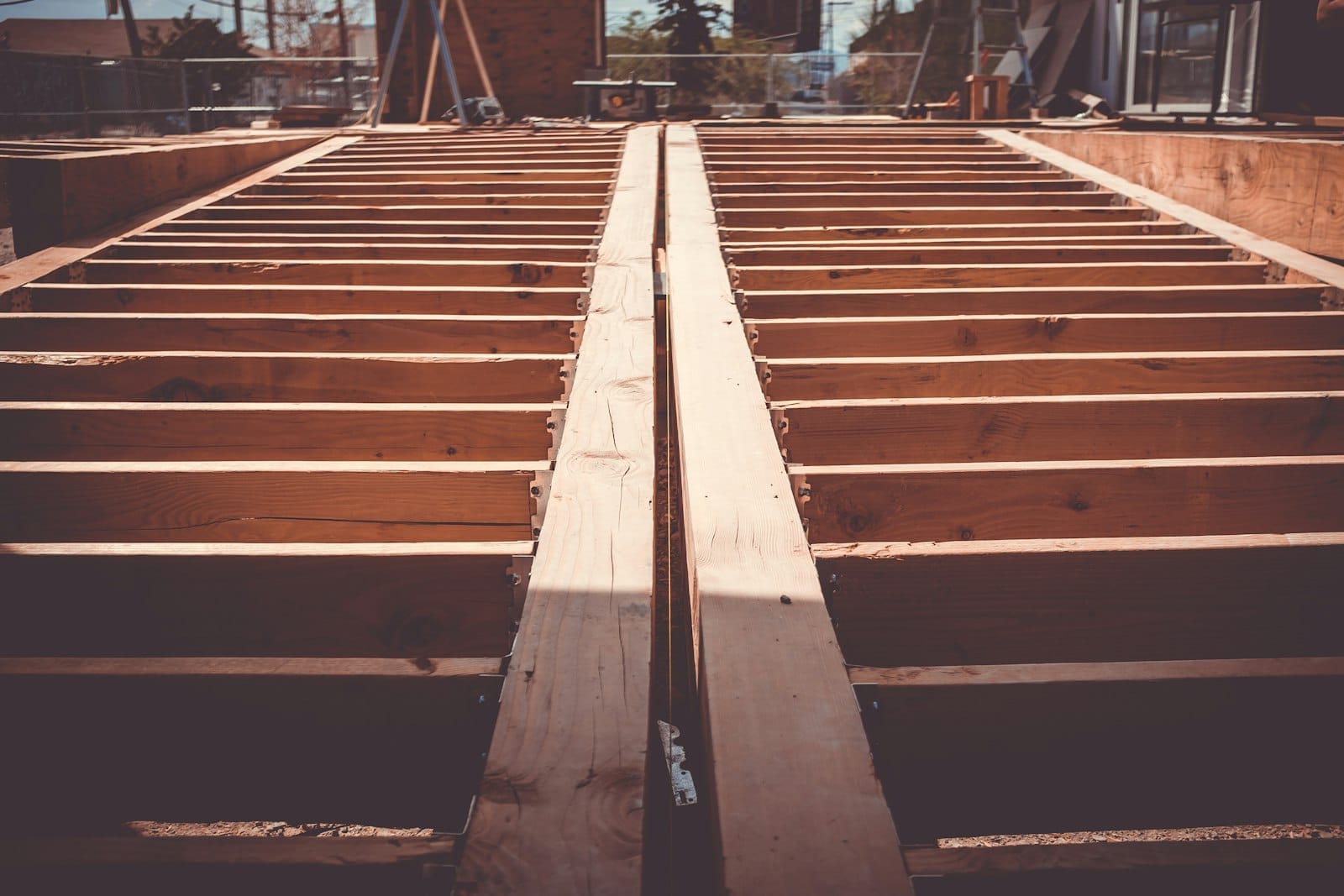
RSG 3-D's non-combustible panel system offers a financially competitive alternative to conventional construction that delivers wildfire, earthquake, and hurricane resilience.
The Weekly: The Investment Case for Climate Resilience
In this edition of The Weekly, we share a condensed version of a new article by Abby Ross, CEO of The Resiliency Company, on the four convictions underpinning the opportunities in the Adaptation Economy.
Insights & ideas on resilience straight to your inbox. Were you forwarded this email? → Subscribe here
In this edition of The Weekly, we share a condensed version of a new article by Abby Ross, CEO of The Resiliency Company, on the four convictions underpinning the opportunities in the Adaptation Economy.
In 2011, Marc Andreessen of a16z wrote a famous blog post, Why Software Is Eating the World. For those in Silicon Valley working in software, it probably seemed like it was eating the world. And yet, after fifteen years, when software became an ever larger part of our lives, it still only represents less than 5% of the U.S. GDP. Depending on how you define the boundaries, real estate and construction account for around 20% of the U.S. GDP.
In 2026, what’s really eating the world is how society adapts to climate instability. This is the adaptation economy, a segment of the larger economy that comprises disaster preparation, recovery, rebuilding, financing, insurance, and resilient adaptation. In the 1990s, the U.S. spent an average of $80 billion annually on the adaptation economy. Today, U.S. annual spending on the adaptation economy has reached almost $1 trillion.
Much of this growth is driven by the increasing frequency and severity of natural disasters. The climate continues to change.
The when and where of the next disaster are relatively unpredictable. The pattern of bigger, more frequent, and more expensive disasters isn’t. It’s entirely predictable, and it’s creating a level of confidence amongst investors, operators, insurers, and financial institutions that there is a rare opportunity to boost our collective resilience at a population level and make money doing it.
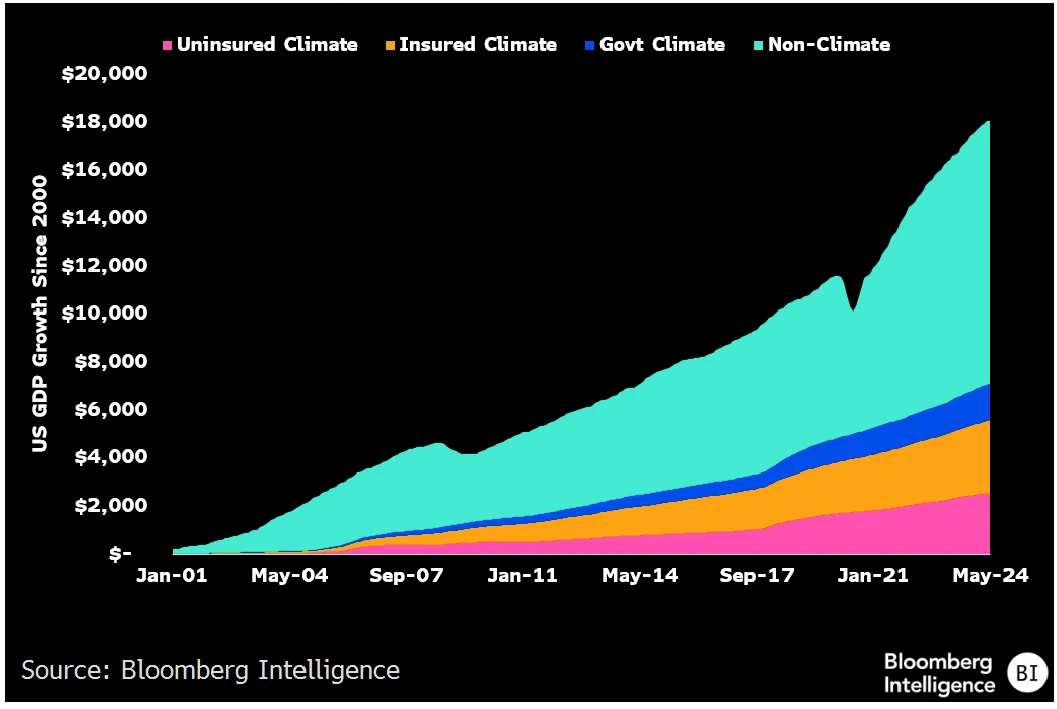
There are new investors and funds cropping up with an adaptation lens. Bloomberg’s “Prepare and Repair Index,” a list of 100 public companies spanning waste haulers to engineering contractors to insurance companies, has outperformed the S&P 500 by 6.5% annually over the past decade. The graph below shows that U.S. spending on climate-related insurance premiums, infrastructure, and disaster recovery accounts for 40% of U.S. GDP growth since 2000, making climate one of the fastest-growing sectors of the economy.
Speaking with hundreds of investors and operators over the last six months, Abby has identified four convictions that keep coming up.
Conviction #1: Adaptation will touch everything
The adaptation economy is not as narrow a category as “climate mitigation.” Instead, it includes multiple sectors and industries—from manufacturing to real estate and financial services to supply chain management and logistics.
Conviction #2: Embracing adaptation leads to more durable investments
Investments with an adaptation/resilience lens will end up being better, more durable investments—particularly during times of unpredictability. From fortified roofs for single-family homes in Florida to fire mitigation services in California to large-scale water supply infrastructure in major cities across the country, the growth in frequency, size, and expense of climate disasters means the demand for these services is reaching a new normal.
Conviction #3: There is predictable growth and demand
The growth of the adaptation economy is based on the understanding that costly, frequent, severe disasters are now the new normal. Investors and entrepreneurs are using historical data from Climate Central’s database to forecast historical trends forward and allocate capital accordingly.
“You know more about how climate change is going to unfold than you do about the path of inflation, interest rates, consumer behavior, artificial intelligence,” Jay Koh, the co-founder of the Lightsmith Group, said on a recent podcast.
Conviction #4: It’s still early and underserved
The adaptation economy is large and predictable, but it’s also a new category or lens for investors. Chris Goolgasian at Wellington Management mentioned on the Climate Proof podcast that he’s noticed a shift in investor understanding. For a while, he said, he was educating investors on what an adaptation lens was. Now, sophisticated investors get it, and they’re sizing the market and identifying where to place capital.
It’s time to build (with resilience)
It’s time to build in the adaptation economy. The trillion-dollar adaptation economy will create countless billion-dollar companies that are reconfiguring and rebuilding America’s physical and financial infrastructure (not to mention the thousands of sub-billion-dollar companies).
What the Market Thinks: How Global Insurers Are Responding to Rising Physical Risk | MSCI Institute | Insurers are adjusting their strategies as losses mount. A new analysis from MSCI Institute finds that while individual insurers feel prepared for rising physical risks from extreme weather, many perceive the industry as a whole lagging behind.
Severe Storms in Kansas Lead to $879 Million in Insurance Claims in 2025 | Insurance Journal | Kansas saw its insurance claims in 2025 nearly double from 2023, with hail playing a major role in that increase. Sedgwick County, which contains Wichita, accounted for over a third of the payouts, as baseball-sized hail damaged up to 140,000 homes. The spike in claims highlights how hailstorms can rapidly escalate storm damage costs.
6 Investments to Maximize Climate Resilience | Smart Cities Dive | From floodable parks to distributed energy systems, cities are prioritizing infrastructure investments that deliver multiple benefits during climate shocks. This article features six strategies urban leaders are using to reduce risk while improving infrastructure durability and emergency preparedness.
Kristi Noem All But Killed FEMA. Will Her Departure Save It? | Grist | Kristi Noem’s tenure as Homeland Security secretary left FEMA hamstrung, with frozen disaster payments and proposed workforce cuts. Noem’s departure raises questions about whether her successor will restore the agency’s ability to respond to disasters.
Read more about resilient public infrastructure and government solutions on The Epicenter here.
Real Estate & Construction
Eaton and Palisades Fire Refugees Moved Near and Far — And Often | LA Times | After the 2025 Eaton and Palisades Fires, thousands of Los Angeles residents faced a scramble for shelter, with some moving 15 times while their homes were rebuilt. The LA Times analyzes what happened to fire survivors and where they went to find shelter.
Harris County Residents Can View Their Potential New Flood Risk Under Proposed FEMA Map | Houston Public Media | Harris County is set for a major update to its flood risk maps for the first time in nearly 20 years, reflecting expanding floodplains across the Houston area. While recent mitigation projects have lowered risk in some neighborhoods, many residents may face higher premiums and stricter development rules as the maps work their way through review and public comment.
Read more about resilient real estate on The Epicenter here.
Private Investment
After the Fire: An ‘Investor Collaborative’ for Long-Term Disaster Recovery | Candid | The Los Angeles Wildfires Recovery & Rebuilding Investor Collaborative combines grants with low-interest loans and loan guarantees to support housing reconstruction, small business stabilization, and reducing displacement risks. Organizers hope the model, which aims to create a $100 million investment platform, can strengthen the financial infrastructure needed for rebuilding.
The Ad Hoc Gist: Two Utility CEOs Spill the Tea | The Ad Hoc Group | The CEOs of Green Mountain Power and CPS Energy describe how extreme storms, rising electricity demand, and aging infrastructure are reshaping the power sector. The discussion highlights a central challenge for the sector: making resilience investments that prevent costly outages, even when the benefits—avoided costs—are difficult to measure.
Read more about private investment on The Epicenter here.
The Adaptation Economy Thesis | Abby Ross | Four convictions drive an evolving investment thesis in the adaptation economy: 1) The adaptation economy is large and growing; 2) Resilience makes for more durable investments; 3) Investors see predictable growth and opportunity in the adaptation economy; 4) It’s still early and underserved.
Why Remediation Is the First Step to Real Resilience | The Epicenter Editors | As the climate crisis exposes broader swaths of the U.S. to severe weather, responsible future-proofing strategies must account for both fortified development and comprehensive cleanup. Real resilience can't exist without effective remediation first.
Rhode Island Offers a Blueprint for Financing Coastal Climate Resilience | Susan Crawford | Over the last 15 years, Rhode Island has seen cataclysmic inland flooding, tornadoes, and rapidly rising sea levels wearing away its coast. But the state plans to be a safer, more stable place to live over the next 50 years.
The Statistic of the Week
62%
62% of insurers in North America believe that the industry as a whole is unprepared for rising physical climate risk.
Have thoughts to share or want to add your voice to the conversation? Reach out!
The Epicenter helps decision makers understand climate risks and discover viable resilience solutions. The Epicenter is an affiliated publication of The Resiliency Company, a 501(c)3 nonprofit dedicated to inspiring and empowering humanity to adapt to the accelerating challenges of the next 100+ years.
Four convictions drive an evolving investment thesis in the adaptation economy:
1) The adaptation economy is large and growing; 2) Resilience makes for more durable investments; 3) Investors see predictable growth and opportunity in the adaptation economy; 4) It’s still early and underserved.
RSG 3-D's non-combustible panel system offers a financially competitive alternative to conventional construction that delivers wildfire, earthquake, and hurricane resilience.
The Epicenter’s three-part home catalogs series from Alexis M. Pelosi and Robin Keegan describes how we arrived at the current moment and explores what it means for the future of housing after disasters and in communities facing disinvestment, outdated zoning, or housing supply constraints.
In an interview with The Epicenter, Joe Rozza of Ryan Companies explains what happens when a major storm hits mid-construction and why CRE leaders should give as much weight to their works in process as they do to projects on either end of the building spectrum.