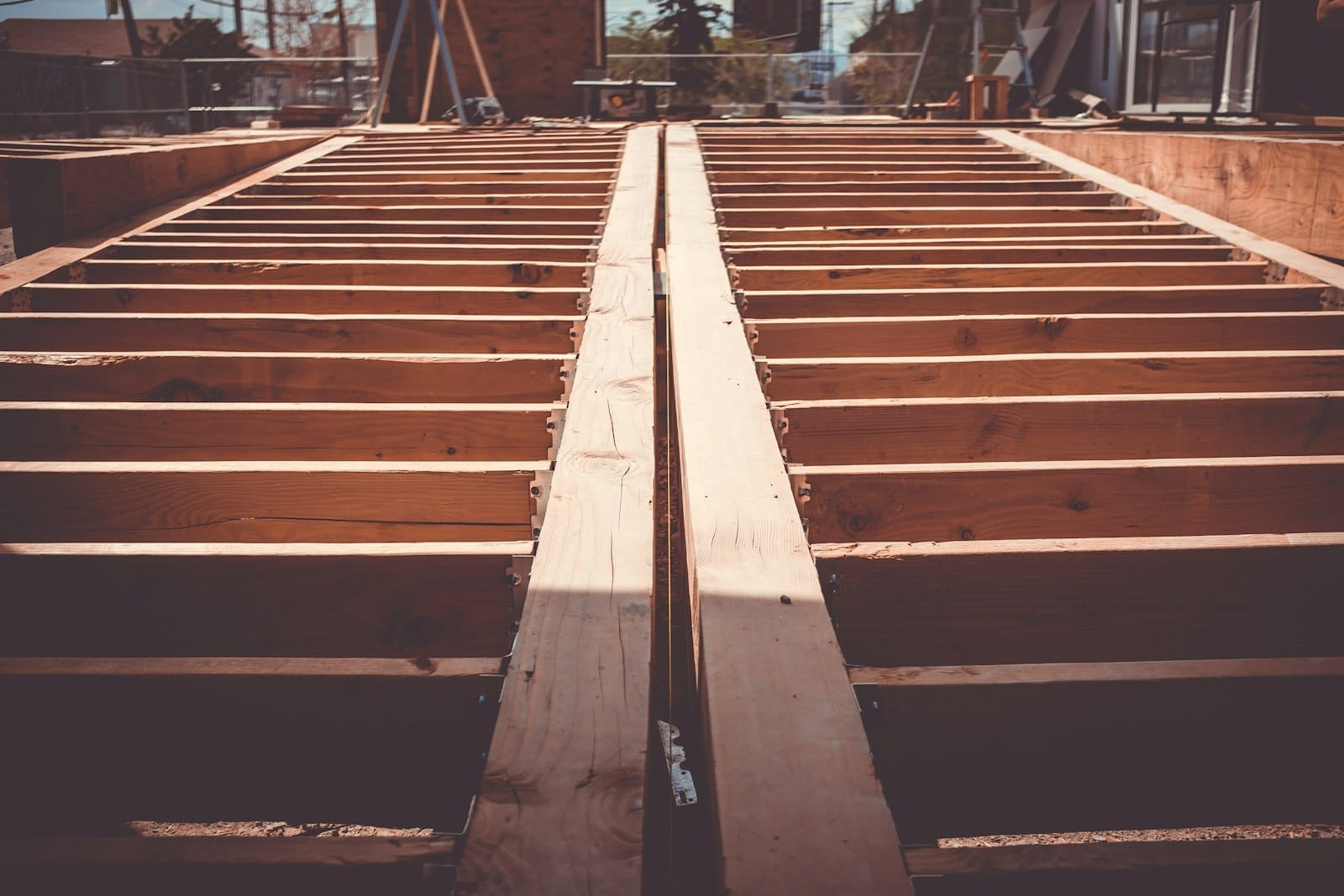
A new set of case studies and a policy brief lay out how states are financing property-level resilience improvements that reduce disaster losses, improve housing affordability, and stabilize stressed insurance markets.
The Weekly: Building Codes Can't Keep Up. Here's How States Can Take Back Control.
As climate-driven hazards accelerate, a dangerous structural misalignment has emerged: What building codes deem legally permissible to construct is increasingly at odds with what catastrophic risk models deem financially viable to insure.
Insights & ideas on resilience straight to your inbox. Were you forwarded this email? → Subscribe here
In this edition:
- Feature: A new article by Alexis M. Pelosi on why a home in the U.S. can be fully code-compliant and still uninsurable. - In the news: Can “digital twin” technology help build resilient infrastructure? - From the archive: How insurers can bend the market toward safety as climate hazards intensify.
In this edition of The Weekly, we share a condensed version of a new article by Alexis M. Pelosi, a contributing author for The Epicenter and a strategic advisor to The Resiliency Company.
A home in the U.S. can be fully code-compliant and still uninsurable. Every year, that gap costs the housing market the equivalent of one month's worth of new home construction to natural disasters. As climate-driven hazards accelerate, a dangerous structural misalignment has emerged: What building codes deem legally permissible to construct is increasingly at odds with what catastrophic risk models deem financially viable to insure.
This dangerous disconnect, however, also presents an opportunity for a permanent fix. By establishing a clear, science-backed standard—a "Resiliency Code" that overlays existing building codes in high-hazard areas—states can finally move fast enough to address the issue of outdated minimums and accelerating climate risks.
The Problem: Code-Compliant Doesn't Mean Climate-Safe
Traditional building codes update slowly, drawing on historical data through multi-year cycles that climate-driven disasters have long since outpaced. As a result, many newly constructed, fully code-compliant homes remain vulnerable to extreme weather.
Insurers have filled the gap, making coverage contingent on mitigation requirements that function as de facto building code requirements—setting thresholds for what is "safe enough" outside the traditional public code-adoption process. With average premiums up 24% since 2021 and roughly 1.9 million policies dropped nationwide, states are now advancing legislation targeting the physical resilience of homes. But these measures rely on insurer-led standards built on proprietary models with no public accountability or democratic oversight.
The Solution: Proactive Resiliency Codes
States don't have to cede that ground. Colorado's Wildfire Resiliency Code Board and New Jersey's Climate-Adjusted Flood Elevation standard prove that states can establish transparent, forward-looking public safety standards aligned with the same predictive science actuaries are already using. Here's what that framework could look like in practice:
Resiliency Code Board: A centralized board of experts maps high-hazard zones and adopts binding, science-based building standards.
Resiliency Certificates: A certificate program ensures properties meeting resiliency codes are recognized by insurers.
Resiliency Fast-Track: States offset hardening costs through expedited permitting, fee waivers, and administrative zoning relief.
Resiliency Prepared Fund: Dedicated grant and loan programs help homeowners afford retrofits required to maintain insurability.
Read more about how resiliency codes can align building standards with climate risk in the full article here.
Weather Prediction Markets Are Booming, but Can They Improve Forecasts? | Carrier Management | Growing weather prediction markets are attracting insurers and reinsurers interested in whether financially incentivized forecasts, grounded in human intuition, can improve the forecasting of insurance-relevant risk. Experimental trading platforms aim to discover if prediction markets may reveal hidden expertise faster than traditional modeling.
New Research: Resilient Rebuilding Can Strengthen Insurance Markets | NAIC | New research led by the National Association of Insurance Commissioners’ (NAIC) Catastrophe Risk Management Center of Excellence (COE) demonstrates how science-based mitigation and catastrophe modeling can significantly reduce disaster losses and support stronger, more stable insurance markets.
Digital Twin Technology Can Help Build Resilient Public Infrastructure | Deloitte Research | Advanced digital twin technology can allow governments and policymakers to test planning and design assumptions, identify failure points, and assess the performance of existing and new infrastructure projects, driving effective decision making and policy implementation.
How EVs Could Solve a Problem with America’s Rickety Grid | Grist | Vehicle-to-grid technology could turn electric vehicles into a distributed network of backup batteries, helping stabilize power systems and support renewable energy growth. Modeling shows EVs can strengthen grid resilience, if paired with proactive upgrades to transmission, transformers, and charging infrastructure.
Read more about resilient public infrastructure and government solutions on The Epicenter here.
Real Estate & Construction
Study Links Sustainable Buildings to Higher Value and Lower Risk | Canadian Occupational Safety | A new analysis quantifies how climate resilience and energy efficiency affect property values, linking safety and sustainable performance to financial outcomes. Buildings that anticipate climate risk gain value, while inefficient or uninsurable assets face potential double-digit losses.
Colorado Approves New Wildfire-Ready Building Codes | Colorado Public Radio | Counties and fire protection districts in high-risk wildfire areas throughout Colorado have until July 1, 2026, to fully implement Colorado’s Wildfire Resiliency Code for new construction or significant renovations.
Read more about resilient real estate on The Epicenter here.
Building the Financial Case for Urban Adaptation: Guidance and Case Studies | C40 Knowledge Hub | Despite strong evidence that climate adaptation delivers major societal returns, cities still struggle to attract private investment. This implementation guide describes how adaptation projects become bankable, with recommendations and case studies about how public leadership and private capital can work together to fund resilience.
Read more about private investment on The Epicenter here.
Have thoughts to share or want to add your voice to the conversation? Reach out!
The Epicenter helps decision makers understand climate risks and discover viable resilience solutions. The Epicenter is an affiliated publication of The Resiliency Company, a 501(c)3 nonprofit dedicated to inspiring and empowering humanity to adapt to the accelerating challenges of the next 100+ years.
A new set of case studies and a policy brief lay out how states are financing property-level resilience improvements that reduce disaster losses, improve housing affordability, and stabilize stressed insurance markets.
Los Angeles isn't short on ideas or expertise. But, like many communities rebuilding after a disaster, it lacks the connections, systems, and capacity to bring them together at scale.