RSG 3-D's non-combustible panel system offers a financially competitive alternative to conventional construction that delivers wildfire, earthquake, and hurricane resilience.
The federal government's retreat from climate adaptation has created a gap in data, funding, and coordination, but a new decentralized ecosystem of nonprofits, state governments, and coalitions is stepping up to fill the void and may prove more resilient to political disruption in the long run.
As federal disaster support shrinks, resilience districts offer local governments a promising new financing tool to fund climate adaptation on their own terms.
The Weekly: Resiliency Spotlight on the Non-Combustible Building System Fortifying 80 LA Homes
RSG 3-D's non-combustible panel system offers a financially competitive alternative to conventional construction that delivers wildfire, earthquake, and hurricane resilience.
Insights & ideas on resilience straight to your inbox. Were you forwarded this email? → Subscribe here
When the Valley Fire swept through Northern California in 2015 and destroyed nearly 1,900 structures, one building didn't burn. It was built with RSG 3-D panels: a composite system of steel, insulation, and concrete that has been around since 1990 but is only now starting to gain large-scale adoption as California residents and developers seek a resilient building solution.
The Epicenter interviewed Ken Calligar, CEO of RSG 3-D, about the system's growing adoption and what it means for homeowners, builders, and insurers navigating California's wildfire crisis.
Calligar, who acquired RSG 3-D in 2018, has a blunt thesis: "The first principle of any building and development has to be resilience, because without that, nothing else occurs. If we build a LEED building or a beautiful energy-efficient home and it burns down the next day, what have we accomplished? Nothing."
The Building Envelope is the Foundation for Multi-Hazard Resilience
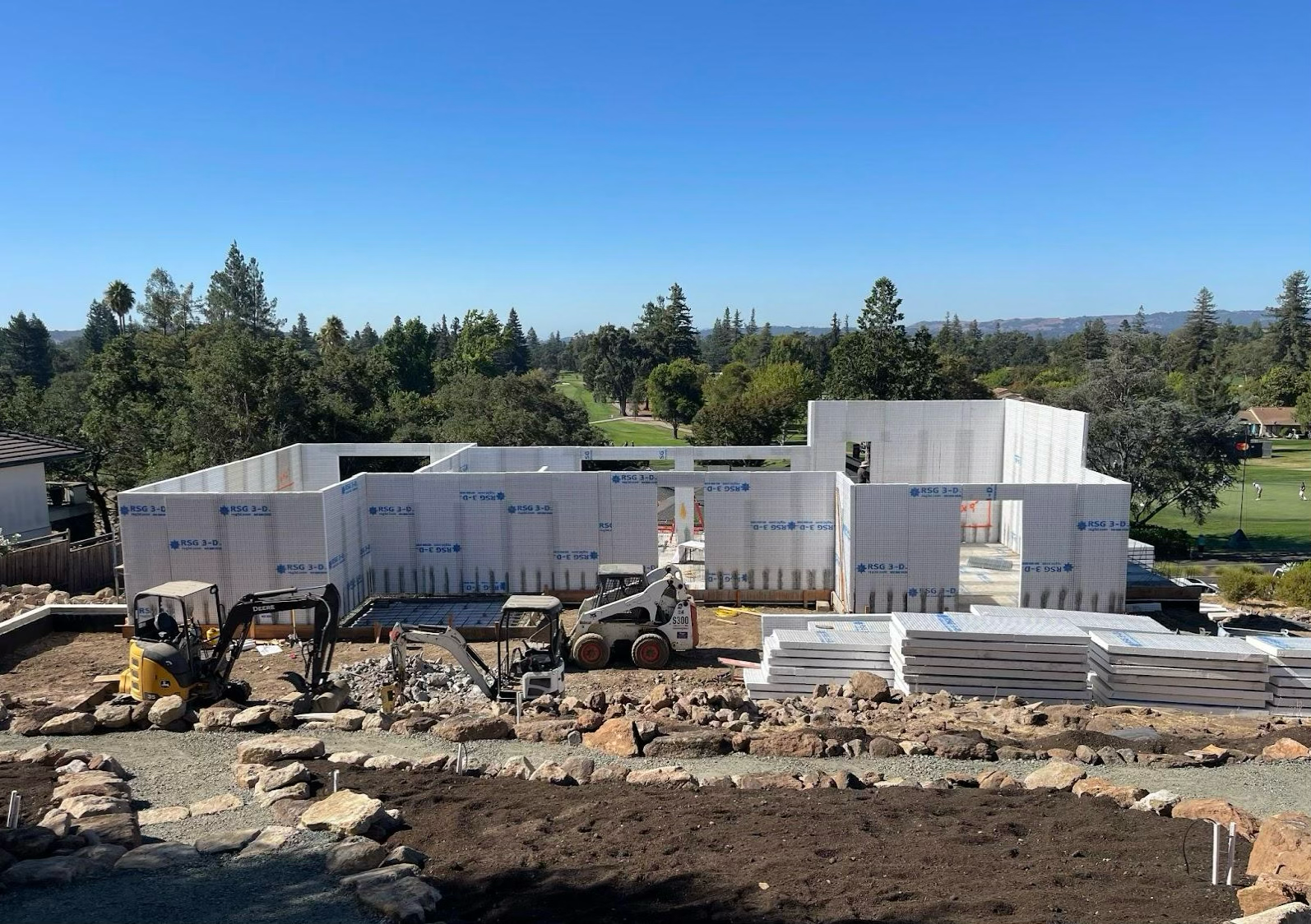
“For us, the building envelope is everything,” says Calligar. Each RSG 3-D panel has a core of expanded polystyrene insulation sandwiched between two faces of steel mesh, connected with a proprietary steel truss, and then covered on both sides with 1.25 inches of structural concrete. The company says the system has never suffered damage from wildfire, earthquake, or hurricane in over 30 years of deployments. The panels were tested to a 9.4 Richter equivalent at UC Irvine without producing a cosmetic crack.
Calligar says that the home building envelope typically surpasses California's Title 24 energy code by 25%-30%. The combination of disaster resilience, energy efficiency, healthfulness, and affordability offers a comprehensive building solution. One customer observed, “Your thing really does a lot of things.” Calligar simply says that the company is building for “what’s next.”
The Economics of Resilient Construction Have Shifted in Favor of Premium, Efficient Materials
The upfront cost premium that once made RSG 3-D a hard sell has largely disappeared. “Twenty, thirty years ago when the system was invented, it was very much a premium cost,” says Calligar. Now, "for a quality home, we are generally at the same initial cost, or maybe a 3%-5% premium. But RSG 3-D will be the most affordable home to own.”
The materials are more expensive, but they often cost less to install. In a typical build, RSG 3-D panels require two materials to install and three trade specialties, compared to the dozen materials and six trade specialties common in high-performance wood-frame construction. “They'll have five inspections, we'll have one,” says Calligar.
Meanwhile, he says, “our homes are generally appraising 10%-15% higher than the wood-frame house next door.” On a $2 million Palisades rebuild, a $60,000 RSG 3-D premium can translate to $200,000-$300,000 in immediate equity based on the increased home value.
Over a few decades, the lifecycle savings compound further. According to Calligar, RSG 3-D has negotiated with insurers to offer approximately 50% reductions on fire and seismic premiums for RSG 3-D structures. "These insurance companies want to be in the business of insuring people," he says. "They don't want to run from these markets. But they've got to have a viable way to do business, and they recognize that RSG 3-D has a very low-risk product."
RSG 3-D Is Building 80 Homes in LA
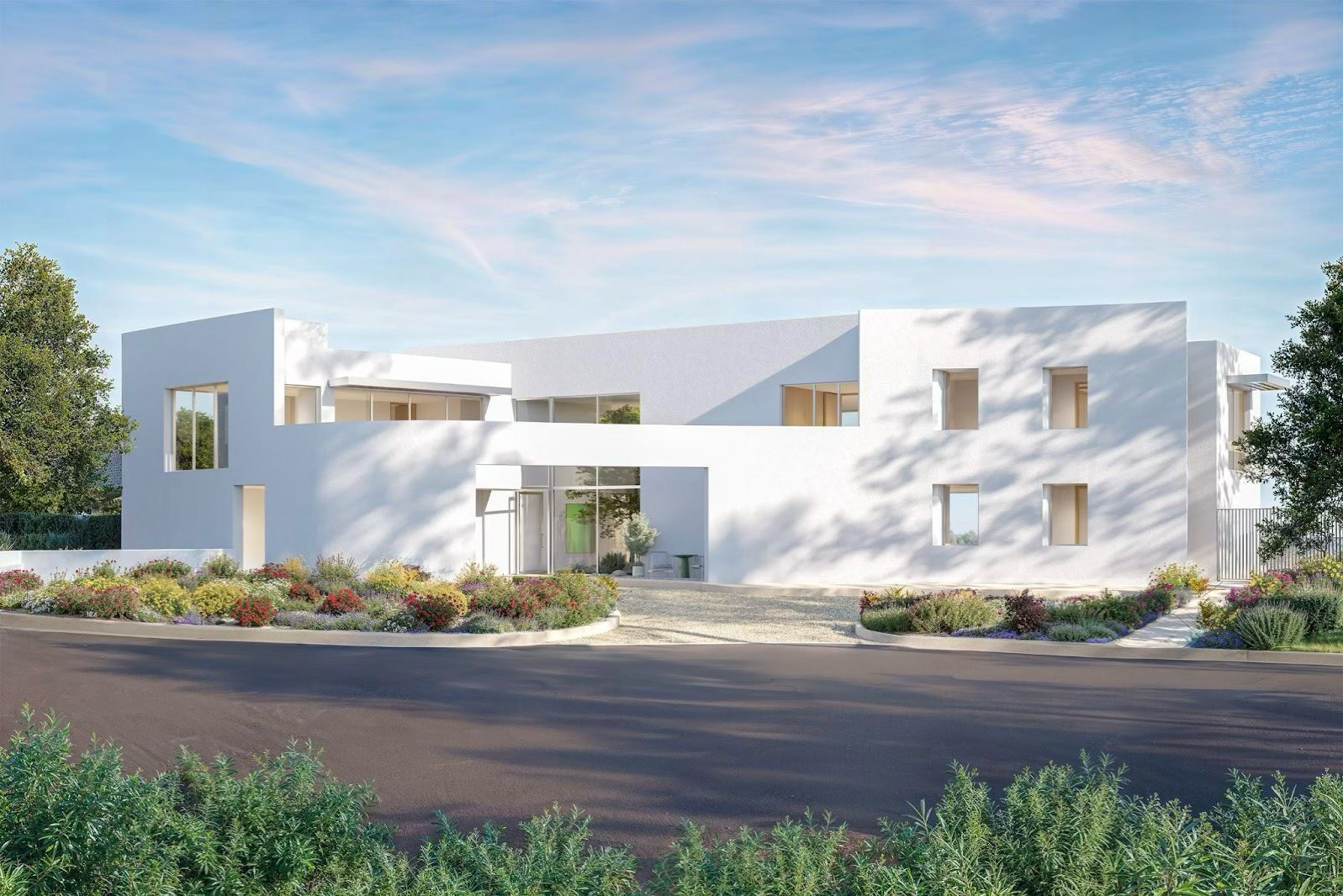
RSG 3-D currently has about 60 homes in process in Pacific Palisades and roughly 20 in Altadena. Calligar shared that clients rebuilding in California have boiled their questions down to three: How much, how fast, and can I get insurance? "Not how much is the insurance costing, just ‘Can I get it?’"
Calligar is thinking about those homes collectively. A cluster of non-combustible structures changes the entire neighborhood’s fire dynamics. "In a fire event, a house is nothing but a fuel depot," he says. Harden enough of them, and you interrupt the chain of combustion that turns a wildfire into an urban disaster. In the process, you also make the neighborhood more insurable. Insurance companies that retreated from California are beginning to see a return path, but the terms of re-entry increasingly favor fire-resilient structures they can actually underwrite.
The transition won't happen overnight, Calligar acknowledges. “In the U.S. about 1% of single-family homes turn over every year, so theoretically, if we built everything going forward with RSG 3-D, we'd be out of this risky mess in 100 years,” he says. “That's why some of these natural disaster rebuilds are a great opportunity for us to help a lot of people. The LA fires have been a great tragedy, but we can assure our future with purpose-designed building solutions.”
Climate Action Is the World’s Cheapest Insurance Policy | Euronews | A new European study argues that investing in climate adaptation is far cheaper than paying for disasters after they occur. The message applies globally: Climate mitigation acts as a form of economic insurance, reducing the mounting costs that governments, insurers, and taxpayers face as extreme weather intensifies.
Insurance and Asset Managers Can Trigger a Virtuous Cycle for Climate Action | World Economic Forum | This piece describes how insurance markets could transform societal risk exposure. By investing in resilience and sustainability, insurers could lower losses and “steer entire sectors toward low-carbon and climate-resilient technologies.”
Scientists Have Found Another Alarming Pattern in Wildfires | Grist | Researchers have identified a troubling shift in wildfire behavior: Hotter, drier conditions are syncing up, making simultaneous wildfires more likely. This change could put more stress on firefighting infrastructure as money and manpower are stretched thin by multiple blazes.
Why Electricity Bills Are So High | Inside Climate News | Across the U.S., increasingly severe weather is forcing utilities to spend billions hardening and repairing the power grid. Those climate-driven infrastructure costs, alongside rising fuel prices and growing demand, are contributing to higher electricity bills.
Read more about resilient public infrastructure and government solutions on The Epicenter here.
Real Estate & Construction
Maine County Rebuilds Its Destroyed Dunes. It’s Just the Start to Save the Coastline | Insurance Journal | After devastating winter storms in 2024 wiped out large stretches of southern Maine’s dunes, York County has begun dredging sand and restoring beaches to rebuild this natural line of protection for coastal communities. The $5.1 million effort exemplifies how nature-based infrastructure can help buffer homes and businesses from intensifying storms and rising seas.
Climate-Disaster Scores Can Make or Break a Home Sale — But They Are Often Wrong | Moneywise | Some homeowners argue climate risk ratings are inaccurate and unfairly depress property values. This piece describes how unhappy homeowners can fight an inaccurate score, and points out that a low score is a good reason to invest in protective measures to reduce risk.
Read more about resilient real estate on The Epicenter here.
Private Investment
Investors Keep Buying Up Burned Lots in Altadena, Pacific Palisades. Could Congress Limit Such Sales? | Los Angeles Times | A proposed California bill would temporarily block institutional investors from purchasing homes in areas recently hit by natural disasters. Supporters say the measure would prevent private equity firms from scooping up damaged properties at steep discounts. Critics argue it could slow rebuilding and investment.
AXA, Munich Re Turn to Satellites to Tame Climate Risk | Climate Proof | Major insurers, including AXA and Munich Re, are increasingly using satellite data to monitor climate hazards and assess risk. Climate Proof notes that the field’s potential remains largely untapped, held back by a shortage of expertise in handling complex Earth Observation data. That constraint is likely to ease as tools and talent in the space continue to grow.
Read more about private investment on The Epicenter here.
Beyond Disasters: Home Catalogs as a National Housing Solution | Alexis M. Pelosi and Robin Keegan | The same principles that accelerate disaster recovery can address housing supply constraints, urban disinvestment, and affordability challenges in any market.
The Federal Climate Retreat and Rise of a New Adaptation Ecosystem | Marissa Knodel | Climate scientists and researchers are working within a very different environment than they were even two years ago. And yet, a new adaptation ecosystem is emerging to fill the void that is more decentralized, more collaborative, and more resilient to political disruption than the federal structures it is replacing.
Resiliency Spotlight: Nanotech’s Cool Roof and Fire Mitigation Technology | The Epicenter Editors | If $1 invested in disaster prep saves $13, then its clear investing in preparedness produces a higher ROI than recovery. But what does that preparation look like? An interview with Nanotech Materials offers an example of resiliency in the category of fortified roofing and building materials.
The Statistic of the Week
7%
Market research estimates that the global satellite-based Earth observation industry is expected to grow 7% per year through the end of the decade.
Have thoughts to share or want to add your voice to the conversation? Reach out!
The Epicenter helps decision makers understand climate risks and discover viable resilience solutions. The Epicenter is an affiliated publication of The Resiliency Company, a 501(c)3 nonprofit dedicated to inspiring and empowering humanity to adapt to the accelerating challenges of the next 100+ years.
The federal government's retreat from climate adaptation has created a gap in data, funding, and coordination, but a new decentralized ecosystem of nonprofits, state governments, and coalitions is stepping up to fill the void and may prove more resilient to political disruption in the long run.
Resilience districts give local governments a new financing mechanism to fund climate adaptation, but their success depends on applying a forward-looking, risk-informed approach rather than defaulting to traditional bond financing logic.
The housing affordability crisis and the wildfire crisis aren't distinct challenges. They're a self-reinforcing cycle that requires investing in resilience to break.
The Epicenter’s three-part home catalogs series from Alexis M. Pelosi and Robin Keegan describes how we arrived at the current moment and explores what it means for the future of housing after disasters and in communities facing disinvestment, outdated zoning, or housing supply constraints.