

The Weekly: El Niño Is a Stress Test for America’s Infrastructure. It Can Show Us Where to Invest Next.
There is a 75% chance that El Niño strength will exceed every event on record since 1950.
There is a 75% chance that El Niño strength will exceed every event on record since 1950.

To address the housing crisis in the U.S., we need a three-part strategy for centering resilience.
If we don’t build it right and build it to last, new housing supply won’t solve today’s housing crisis.
With fire seasons now roughly two months longer than they were in the 1970s, 2026 could reset the ceiling on wildfire losses again.

The United States is heading into the 2026 wildfire season after one of the most expensive years on record. The 2025 Los Angeles fires alone produced $40 billion in insured losses, the largest wildfire insurance loss the industry has ever recorded.
But early data in the first few months of 2026 suggest the bill is about to grow. By May 1st, 1.8 million acres had already burned across the U.S., the highest year-to-date total since 2017. Florida and Georgia are in extreme drought. Colorado just closed its worst snowpack year on record at 22% of the 30-year median. With fire seasons now roughly two months longer than they were in the 1970s, 2026 could reset the ceiling on wildfire losses again.
Since 1980, wildfires have claimed a growing share of the billion-dollar disaster ledger.
The cost drivers haven't changed from the framework we've laid out in prior versions of our Wildfire Hazard Briefings (which were first released in 2024). Three drivers continue to push wildfire from a periodic catastrophe into a structural cost driver. What has changed is the data underneath each one—and the maturity of the private-sector responses. As we enter wildfire season in 2026, we’ve updated the Wildfire Hazard Briefing Part I and Wildfire Hazard Briefing Part II with current statistics, new research, and examples of private sector innovations.
Driver #1: Climate change and land management policy are making wildfires more frequent and intense.
A warming climate has produced hotter, drier conditions and prolonged droughts, leading to earlier snowmelt, longer fire seasons, and drier accumulated vegetation. Meanwhile, fire suppression policies have made wildfires more severe by preemptively suppressing small fires that help reduce brush accumulation.
Driver #2: Population growth in fire-prone areas has placed more assets in harm's way.
The Wildland Urban Interface (WUI), where human development meets flammable wildland, is the fastest-growing land use type in the contiguous United States. From 1990 to 2020, the number of homes in the WUI grew by 47%, and it now encompasses nearly a third of all U.S. homes. Unaffordable housing in urban centers has driven much of that growth, pushing middle- and lower-income households into fire-prone areas where prices are lower and risk is higher.
More people in the WUI translates directly into higher costs. The Forest Service spent nearly four times as much fighting fires in 2020 as in 1989 (adjusted for inflation), and those costs could rise as much as 84% by 2050.
Driver #3: The physical assets in harm's way are not built to withstand wildfire.
Out-of-date zoning, lapsed building codes, and underinsurance compound the exposure problem. Many municipalities have not adopted fire-resistant building standards, and even where codes exist, enforcement is uneven. One in seven U.S. homes is uninsured.
Since 2020, California's insurer of last resort, the FAIR Plan, has more than doubled in size. When households lack adequate insurance, the costs of recovery fall on individuals, local governments, and federal disaster programs.
The disparity cuts along economic lines. A 2020 study found that wildfire spread is 6% less likely to occur when average property values increase from $200,000 to $400,000, in part because wealthier communities can afford the landscaping, home hardening, and maintenance that create defensible space. Rural, lower-income, and immigrant communities often cannot.
Opportunities to Reduce the Impacts of Wildfires
The growth in wildfires has been met with a fast-growing ecosystem of solutions, innovations, and coordinated efforts to keep people and property out of harm’s way.
No single measure will reverse these trends. More people and assets in fire-prone areas, combined with hotter and drier conditions, mean baseline costs will remain elevated. But there are meaningful levers for the private sector to reduce damage and interrupt the cycle of loss.
These opportunities, outlined in our Wildfire Hazard Briefing Part II, include:
For a full breakdown of the growing costs of wildfires and the many private-sector levers to reduce them, read our updated Wildfire Hazard Briefing Part I and Wildfire Hazard Briefing Part II.
Read more about insurance on The Epicenter here.
Read more about resilient public infrastructure and government solutions on The Epicenter here.
Read more about resilient real estate on The Epicenter here.
Read more about private investment on The Epicenter here.

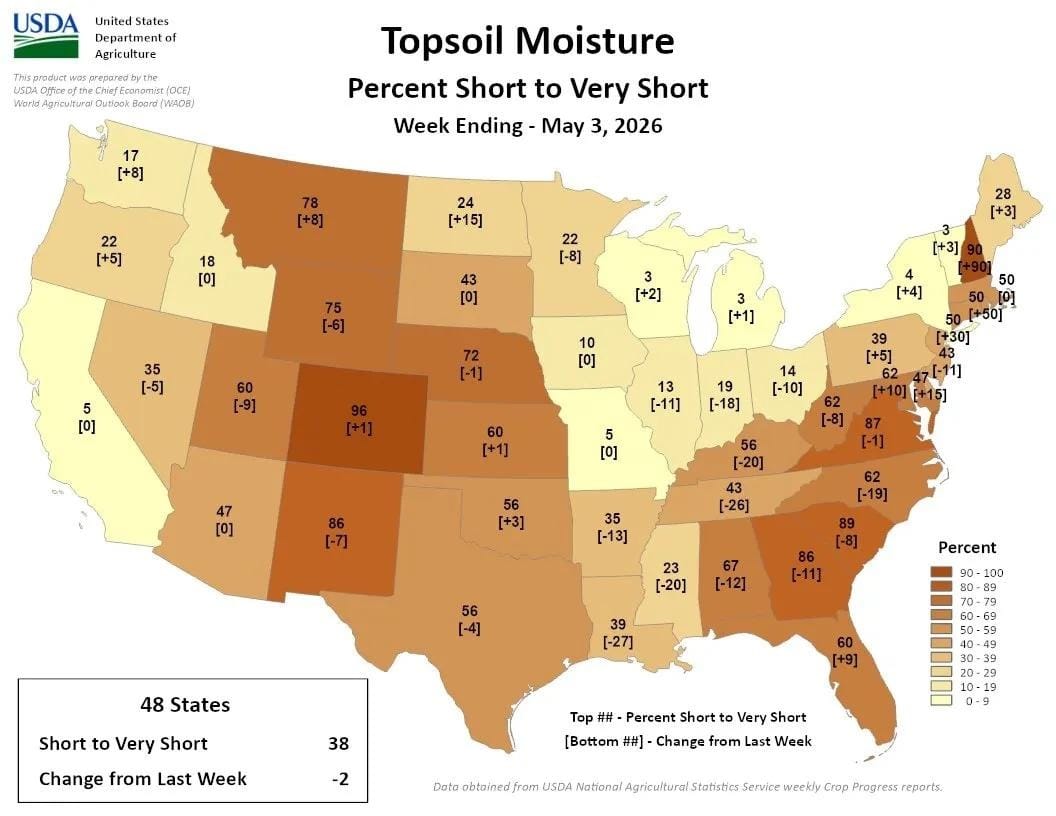
50%
Most states are at least 50% short of their average topsoil moisture for this time of year. These dry conditions can exacerbate fire.
Source: Hotshot Wakeup and USDA
Have thoughts to share or want to add your voice to the conversation? Reach out!
The Epicenter helps decision makers understand climate risks and discover viable resilience solutions. The Epicenter is an affiliated publication of The Resiliency Company, a 501(c)3 nonprofit dedicated to inspiring and empowering humanity to adapt to the accelerating challenges of the next 100+ years.

Builders have the power to influence how resilient a home rebuild is.

Los Angeles isn't short on ideas or expertise. But, like many communities rebuilding after a disaster, it lacks the connections, systems, and capacity to bring them together at scale.

Three lessons from the Rebuilding with Resilience Summit

Wildfire season is changing how utilities fortify against wildfires