Wildfires: The Drivers Putting People and Assets At Risk
Climate change and federal policies are making wildfires more frequent and intense. Migration patterns are increasing the exposure of assets to wildfire threats. And assets that are more vulnerable to wildfires translate into higher costs.
PART 1: This is part one in a two-part briefing on wildfires. Part two of this Wildfires Briefing series focuses on the levers that exist to reduce these impacts.
Millions of people throughout the United States face the risk of wildfires every year. California remains at the center of that risk: in 2025 alone, more than 8,200 wildfires burned roughly 507,000 acres statewide, including the Los Angeles fires that took 30 lives and caused more than $53 billion in damages. Many other states are also at risk; the 2024 Texas fires burned 1.1 million acres, and the 2023 Lahaina fire on Maui caused an estimated $12 billion in damage in less than 72 hours.
Why are wildfires becoming more frequent and more costly? Climate change is one factor, but the factors contributing to some of the most dangerous wildfires in history are numerous, and the solutions to reduce wildfire impacts are nuanced.
In this two-part Epicenter Briefing, we will identify the drivers making wildfires so frequent, costly, and dangerous; the levers available to us to reduce their damage; and how investors, corporate leaders, insurance companies, community leaders, and policy-makers can stay one step ahead of the next fire.
Let’s be clear: this is not a story of inevitable doom. The growth in wildfires has been met with a renaissance of solutions, innovations, and coordinated efforts to keep people and property out of harm’s way. Private capital plays a major role in protecting communities and assets, limiting damage, and managing risk.
Wildfire Basics
The U.S. Federal Emergency Management Agency (FEMA) defines a wildfire as an unplanned, unwanted fire burning in a natural area.
But wildfires should not be viewed only in negative terms. Wildfires are naturally occurring and contribute to the health of ecosystems and habitats. For thousands of years, Indigenous Land Management Practices have leveraged natural and prescribed fire, also known as cultural burns or controlled burns, to clear areas for crops and travel, manage the land, hunt game, and regenerate soil and ecological habitats. These practices have been used to prevent more devastating wildfires. 2025 research found that contemporary fire occurrence is still well below historical levels despite the large fires of the last five years—and as a result, the fires that do occur are drastically more severe.
Wildfire Drivers
As mentioned in The Epicenter’s briefing on Why Disasters are So Expensive, the research points to four main drivers contributing to the growth in billion-dollar disasters across all disaster types:
Higher frequency and severity are increasing the cost of disasters–climate change is increasing the frequency of weather extremes that lead to billion-dollar disasters.
Greater asset exposure drives costs up–population growth, migration, and land use practices have pushed communities and assets into harm's way.
More vulnerable assets translate into more expensive disasters–when buildings aren’t built with up-to-date codes or disaster-resilient materials, they’re more vulnerable to damage; when assets are left uninsured, it’s harder to afford their replacement costs.
Premiums to rebuild drive up reconstruction costs–in the wake of disaster, rebuilding costs surge as demand outpaces supply, leading to soaring costs.
As it relates to wildfires, we’ve found unique drivers within the first three categories that contribute to greater frequency, more intense destruction, and higher wildfire-related costs.
Driver #1: Climate change and federal policies are making wildfires more frequent and intense.
Climate change is making wildfires more frequent. Intense wildfires are now twice as common as they were in the 2000s. The number of megafires—fires that burn more than 100,000 acres—has ballooned in recent decades. Before 1970, there had never been a megafire. Since the 1970s, the wildfire season in western states has become 2 months longer.
Climate change is making wildfires more intense. A warming climate has produced hotter and drier conditions and periods of prolonged drought. These conditions lead to earlier snowmelt, longer fire seasons, and the accumulation of drier vegetation, which increases the likelihood of larger, hotter, and more intense fires. The annual area burned by high-severity wildfires in the American West has increased about 8x since 1985.
Policy decisions exacerbate wildfire intensity. Forest management policies have also worsened the severity of wildfires. Historical fire suppression strategies have made wildfires more severe by stopping small fires too quickly, which otherwise help reduce brush accumulation that later fuels more severe fires.
Driver #2: Migration patterns are increasing the exposure of assets to wildfire threats.
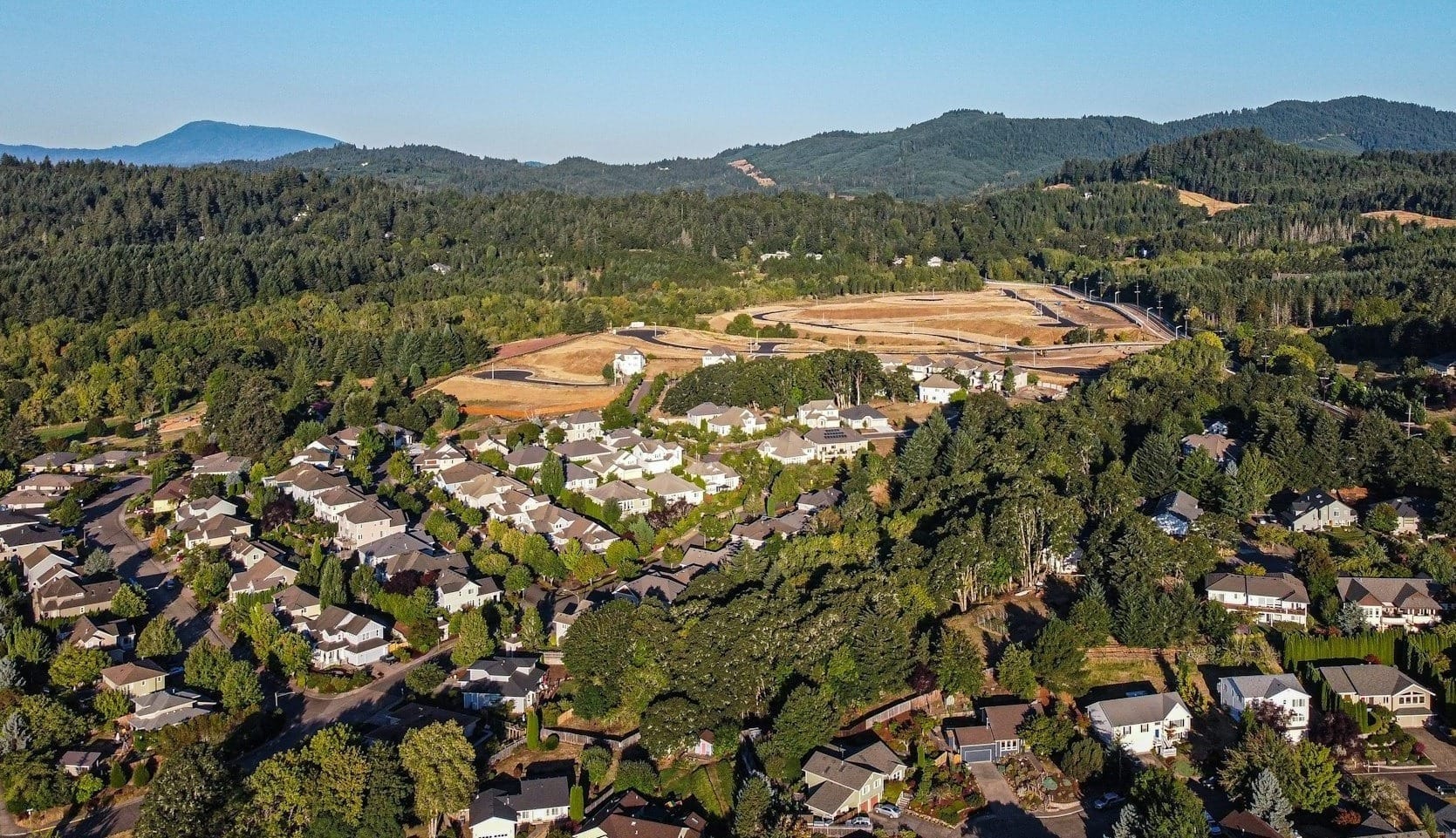
Population migration is increasing the number of assets exposed to wildfire risk. The Wildland Urban Interface (WUI) is the land area where structures and human development intermingle with undeveloped wildland or vegetative fuels, presenting greater wildfire risk. The WUI is the fastest-growing land use type in the contiguous United States. From 1990 to 2020, the number of homes in the WUI grewby 47%. The WUI grows by approximately 2 million homes every year, and now includes nearly a third of all U.S. homes.
The costs associated with migration-related asset exposure are higher for certain populations. Unaffordable housing in urban centers has increasingly driven middle- and lower-income residents into the WUI. As of 2021, in the counties with the highest wildfire risk, there was an overrepresentation of people of color (51%), people with disabilities (12%), and non-native English speakers (7%). A 2025 study found that socially vulnerable populations, particularly senior citizens, face disproportionate exposure to wildfire smoke. And while all residents in the WUI will experience similar risks, differences in how certain populations are excluded from social, economic, and political structures will disproportionately affect the ability of certain households to prepare for wildfires and, in turn, increase the costs of wildfire recovery.
These population shifts have translated into more expensive fires—both in firefighting costs and property damage. The U.S. Forest Service spent nearly 4x as much fighting fires in 2020 as in 1989 (after adjusting for inflation)—and those costs could rise as much as 84% by 2050. In 2025, the Department of the Interior’s Wildland Fire Management Budget rose to $1.9 billion; the requested budget for 2026 is $6.5 billion. Meanwhile, FEMA allocated about $4.5 billion in post-wildfire disaster funding from 2016 to 2020, an 8x increase from the $500 million allocated between 2001 and 2005. FEMA has allocated over $2 billion for the LA fire recovery alone.
Driver #3: Assets that are more vulnerable to wildfires translate into higher costs.
Not only are more physical assets exposed, but those assets are also more vulnerable to wildfire damage and associated costs.
Out-of-date land and community-planning practices contribute to costs. Zoning, local ordinances, and building codes can reduce wildfire damage, but many municipalities are missing up-to-date fire policies and codes, such as requiring fire-resistant building materials and perimeters around homes that are cleared of brush.
Changes in insurance coverage are driving up household costs. Private insurers are rapidly changing where and how they insure properties in areas with fire danger. After Allstate and State Farm backed out of California’s home insurance marketplace in 2023, citing “rapidly growing catastrophe exposure,” companies have continued to restrict coverage or decline renewals. In August 2024, 17,000 California policyholders were notified that they would lose fire insurance—and since 2020, the California insurer of last resort, the FAIR Plan, has more than doubled its policy count. More than one in seven U.S. homes is uninsured.
The up-front costs of protecting assets from wildfires fall disproportionately on lower-income and marginalized households. A study from 2020 found that the spread of fire is 6% more likely to be suppressed when the average value of properties in the fire’s path increases from $200,000 to $400,000. Meanwhile, many households in rural, low-income, and immigrant communities lack the capital necessary to pay for insurance, rebuilding, or continual investment in fire safety, further increasing their vulnerability to wildfire. These compounding factors leave the assets of more vulnerable households at even greater risk, resulting in ultimately higher rebuilding costs.
Compelling Levers Exist To Reduce the Costs From These Drivers
In Part II of this Wildfires Briefing, we unpack the levers we see for where and how private-sector actors can leverage capital to protect and fortify existing assets, and catalyze solutions and innovations that reduce the consequences of devastating fires. Part II explores the following levers:
Implementing modern building materials, zoning requirements, and land use policies
Technologies for better decision-making, risk identification, and fire management
New insurance models
Private-sector financing for forest management
Our goals with these briefings are to describe the mechanisms at play in driving costs, to highlight where and how private capital can flow to advance strategic solutions that reduce those costs. We welcome thoughts from our audience on any items that especially resonated with you, or any of the nuances we’ve missed or mis-captured in our analysis.
Have thoughts to share on this piece, or want to add your voice to the conversation? Reach out!
Sign Up For The Epicenter
The Epicenter is a regular briefing that helps decision-makers understand the risks and impacts from climate hazards and discover practical, cost-effective resilience solutions.
Los Angeles isn't short on ideas or expertise. But, like many communities rebuilding after a disaster, it lacks the connections, systems, and capacity to bring them together at scale.