

The Weekly: Disasters Open A Window To Rebuild with Resilience. Policymakers Can Use It To Fix The System.
To address the housing crisis in the U.S., we need a three-part strategy for centering resilience.
To address the housing crisis in the U.S., we need a three-part strategy for centering resilience.

If we don’t build it right and build it to last, new housing supply won’t solve today’s housing crisis.
For most of the country, in most years, the post-disaster window is not the second-best time to invest in resilience. It is the only time anyone does.
Cities spent decades building pipes and pumps to move water out fast. Hoboken tried absorbing it instead—and cut flooding by 88%.

Urban flooding costs American cities billions of dollars a year. A small but growing number of cities are cutting those costs by rethinking a basic premise—that the fastest way to manage stormwater is to move it out.
In Hoboken, New Jersey, sponge city infrastructure has reduced flooding by 88%. Sponge city design treats urban landscapes as absorbent systems that can store and filter stormwater, using permeable materials and “green infrastructure”: nature-based systems like rain gardens, bioswales (landscaped depressions designed to capture, slow down, and filter stormwater runoff), permeable pavement, and wetlands that manage stormwater by working with natural processes. Instead of building pipes and pumps to move water out as fast as possible, green infrastructure slows it down, absorbing and filtering it before it can overwhelm aging wastewater systems.
In ResilienCity Park in Hoboken, slices of green garden sit between a playscape, lawns, and a basketball court. In good weather, it's just your friendly neighborhood park. But on a bad day, the greenery and peaceful pathways reveal themselves as a network of rain gardens and porous pavers designed to slow and filter runoff. Beneath the basketball court, a two-million-gallon tank goes to work absorbing the water that might otherwise drip into someone's basement.

The Epicenter spoke with Hoboken's resilience team and resilience nonprofit Rebuild by Design—along with water infrastructure leaders in Kansas City, Missouri—to understand the logistics: how projects build political support, who is responsible for maintenance, and what practitioners would tell a city just getting started.
The big takeaways: Make the park nice enough that people forget that it's flood infrastructure, plan for who weeds the rain garden, and don't expect greenery alone to hold back the water.
Green infrastructure is easier to fund and sustain when residents can see what it does for them on an ordinary Tuesday. In Hoboken, the green approach opened up their perspective to the idea of developing infrastructure "that does not only have to serve a risk management purpose,” says Jennifer Gonzalez, Hoboken Business Administrator and Chief Sustainability Officer. Instead, there’s a stack of benefits: infrastructure that can “mitigate flooding and thus support public safety and reduce property damage while also improving quality of life for residents on blue sky days.”
"We really concentrate on this idea of multi-benefit infrastructure," says Amy Chester, executive director of Rebuild by Design, a nonprofit that emerged from post-Sandy federal recovery efforts, worked on Hoboken’s resiliency parks, and has since taken this work to Atlanta, Boston, the San Francisco Bay Area, and abroad. "Infrastructure that can protect you, or save you, or lower your risk from a climate event could also be something that enhances your community, like a park or an open space, or a basketball court that can store water, or that can cool you off on a super hot day."
The stacked “sponge city” benefits don’t all have to be green-space: In Kansas City, Missouri, another pioneer of multi-benefit flood infrastructure, an underpass that was formerly gravel and mud is now an event plaza for festivals and street markets, with permeable brick pavers that filter stormwater through an aggregate bed below, alongside bioswales and native plantings that slow the runoff that doesn't soak in.
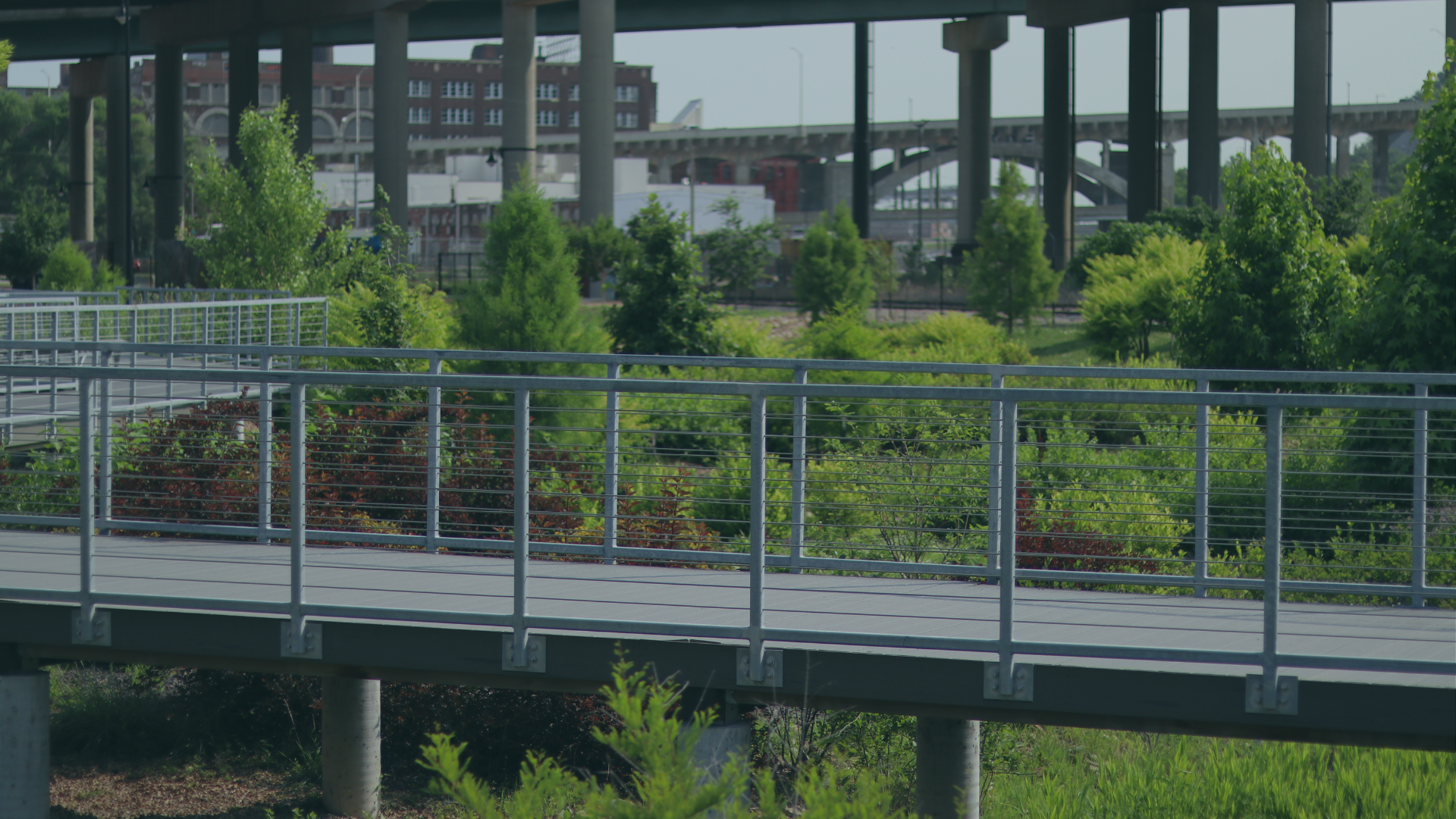
With a stack of benefits, you can tailor the framing you lead with to the audience you’re speaking to. To get community buy-in, “frame the investment as a way to improve neighborhood aesthetics, address environmental justice and create local economic opportunities,” says KC Water Deputy Director of Smart Sewer, Wastewater & Stormwater Engineering, Andy Shively. Then, “when pitching investments to local leaders or ratepayers, focus heavily on cost avoidance.” For example, an analysis in Cambridge University Press found that, over a 50-year life-cycle, a green infrastructure project in Kansas City that replaced a proposed sewer pipeline project costs $1.0 per gallon of annual overflow captured, vs. the $8.6 per gallon that the relief sewer would have cost.
For city governments accustomed to working in departmental silos—water treatment here, parks there—this kind of thinking requires a mental shift. But once Hoboken started designing infrastructure to do more than one thing, it became hard to stop. "We approach almost all projects from a holistic, cross-departmental lens to see how it can serve multiple benefits now," says the city's resilience team. "It has changed our thinking."
"One common misconception is that green infrastructure alone can solve urban flooding," says Hoboken’s Gonzalez. "In practice, cities need a hybrid approach that utilizes green infrastructure and gray infrastructure like pumps and detention tanks."
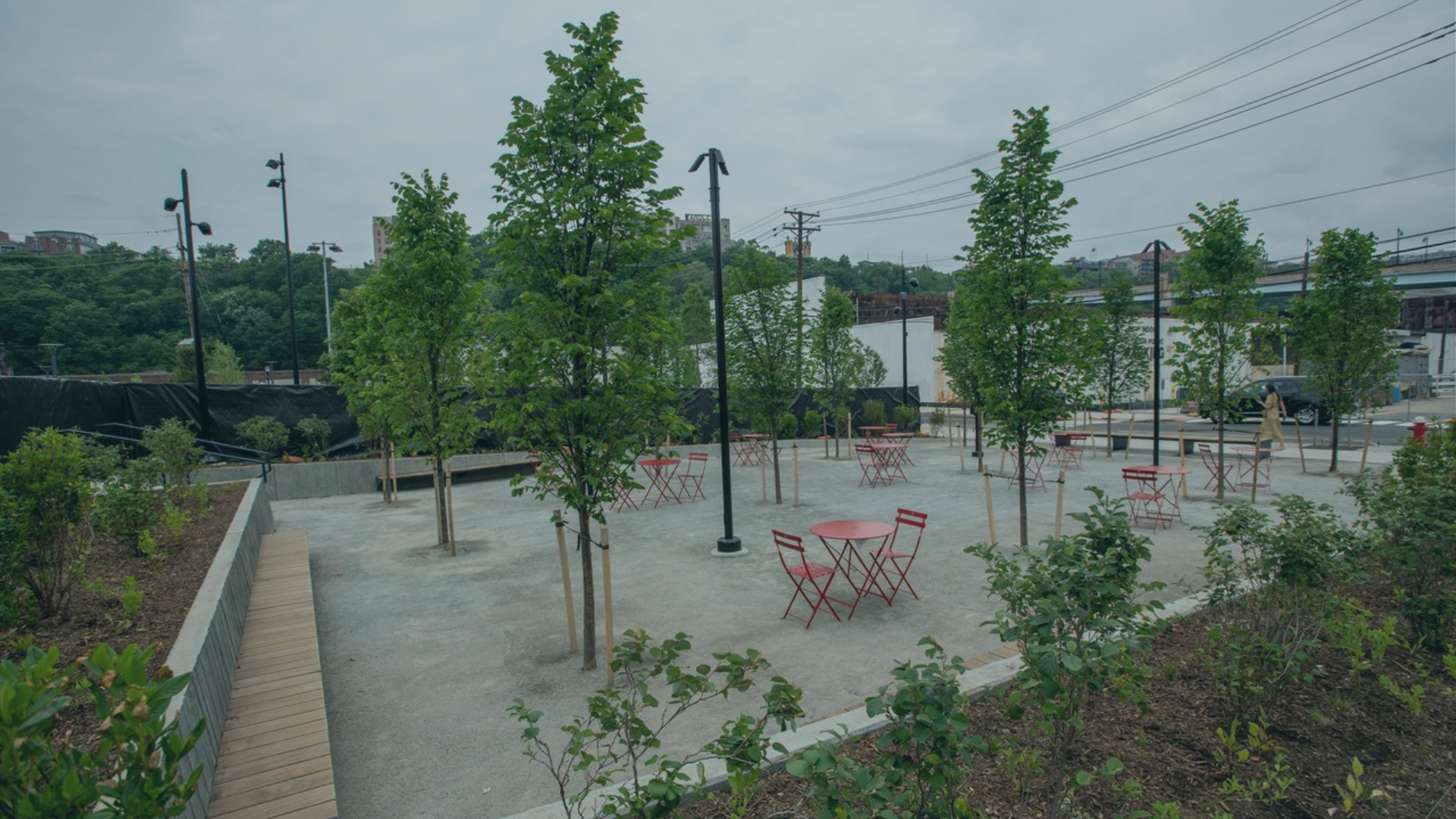
Chester recommends maxing out your green, then supplementing with gray. “In many cases [green alone] is not going to be enough for the deluge of rain. Think about how you can leverage nature to the fullest extent, and then deal with the rest of the gap using gray infrastructure, like a holding tank underneath green infrastructure." Hoboken’s under-park water storage is a perfect example. "That is gray infrastructure—a pump and a giant cement storage tank—but it's under green infrastructure that is also absorbing the water on top."
Kansas City’s Shively recommends using green to reduce the cost of gray. “Relying solely on traditional “gray” infrastructure (like massive underground storage tunnels) is incredibly expensive,” he says. In Kansas City, their green infrastructure “decreases the volume of water rushing into combined sewer systems, which can ultimately eliminate the need to build larger, cost-prohibitive tunnel systems.”
The cities that got maintenance right treated it as a capital investment.
"Green infrastructure needs to be maintained, and it only works if it's maintained," Chester says. "If there is trash, and the trash is clogging up where the water is going to go, it's not going to go there."
She hears the same complaint from cities worldwide: not enough money for upkeep. Her response: Governments should treat maintenance as a continuation of capital investment, not a line item to defer. Unlike more optional maintenance costs that can be kicked down the road—painting a bridge, say—keeping green infrastructure in good shape is necessary to protect the initial investment.
Hoboken has addressed this through a clear division of responsibilities: The city's Division of Parks and Public Works handles the green infrastructure, funded through the operating budget and state grants; the North Hudson Sewerage Authority maintains the pumps and detention tanks.

Kansas City offers a creative example of solving the maintenance problem: making it into a jobs program. Through its Green Stewards Program, KC Water partnered with an environmental nonprofit to train people to do the watering, weeding, and monitoring to maintain the city's green infrastructure sites. A routine public expense became a community asset.
“Community buy-in is vital for the long-term success of these projects,” says Shively. “When citizens understand the benefits—such as reducing basement flooding—they take pride in the projects and help keep an eye on them long after construction ends.”
Gonzalez has advice for a city just getting started with this work.
First: Know your geography. "Start by clearly understanding where your city is most at risk, especially the places that flood or fail most often and cause the most damage. That helps you focus money on projects that will make the biggest impact."
Second: Don't silo resilience. "It works better when it's built into regular city planning like housing, transportation, and parks, so it solves multiple problems at once and is easier to get support for."
Third: Community ownership helps projects go through. "People are more likely to support these projects when they not only understand the flood risks and can see everyday benefits but have also provided input and have ownership in them."
"We advocate for signage and educational moments where you can tell the community: This exists because you fought for it, and this is the same thing that you fought for 12 years ago," Chester says. This is especially important because, without signage, a rambler through a well-designed piece of green infrastructure might never realize it’s also protecting their city from storms. "Each park is beautiful," she says. "It'll kind of blow your mind how beautiful it is, and you're like, 'This is flood infrastructure?'"
Have thoughts to share on this piece, or want to add your voice to the conversation? Reach out!

To address the housing crisis in the U.S., we need a three-part strategy for centering resilience.

If we don’t build it right and build it to last, new housing supply won’t solve today’s housing crisis.

For most of the country, in most years, the post-disaster window is not the second-best time to invest in resilience. It is the only time anyone does.

A new set of case studies and a policy brief lay out how states are financing property-level resilience improvements that reduce disaster losses, improve housing affordability, and stabilize stressed insurance markets.