

The Weekly: Alabama Used Five Financing Levers to Scale Resilient Building Standards Across the State
Alabama’s approach to scaling the FORTIFIED standard has become a blueprint nationwide.
Alabama’s approach to scaling the FORTIFIED standard has become a blueprint nationwide.

Alabama used five financing levers to get insurers and homeowners to pay for FORTIFIED roofs.
Florida and Alabama have spent hundreds of millions fortifying homes. Isaias is the first mainland hurricane to test that resilience since 2024.
When benefits tied to investing in resilience can be measured and demonstrated, major new sources of capital become available to help finance resilience.

This (new!) section offers concrete opportunities to engage with The Resiliency Company events, research, and partnerships. Have another way to engage? Just reply to this email.
Since the first Rebuilding with Resilience Summit convened in June 2025, Los Angeles has moved from ideas to action.
The Resiliency Company, in partnership with the Department of Angels, is convening builders, community leaders, advocates, local governments, financing partners, insurers, and resilience practitioners for a day focused on collaboration, strategy, and implementation built around one question: How does rebuilding with resilience become the norm?
This year's theme, Lessons into Action, moves the conversation from ideas to implementation, with practical next steps for policymakers, insurers, investors, and builders ready to make resilient rebuilding the standard across Los Angeles and beyond.
Space is limited. Readers of The Epicenter can get 10% off the ticket price with the code EPICENTER.
Click here to express your interest in attending on August 18th.
States across the country are developing innovative approaches to finance property-level resilience investments that reduce future losses from natural hazards.
The Resiliency Company has teamed up with The Nicholas Institute to produce a report on lessons from six states that have scaled IBHS FORTIFIED roof adoption.
The report, which will be released in the next few weeks, includes lessons for policymakers, philanthropy, insurers, and investors seeking to scale resilient housing.
Get on the early access list. Be the first to know.
Communities throughout the U.S. are entering a new era of climate adaptation. For decades, attaining greater resilience from extreme weather or related shocks was treated primarily as an environmental objective or an emergency management responsibility.
Major investments typically were made after disasters occurred, and were funded through hard-to-use federal recovery grants, insurance payouts, or state and local “rainy day” funds.
That model is increasingly unsustainable. It’s also short-sighted because weather-related losses continue to rise. The combination of growing climate-related losses, private insurer withdrawal, and federal cutbacks means that state and local governments bear an increasing share of the fiscal risks tied to extreme weather, as Pew Research recently detailed.
At the same time, states and localities are being asked to invest more in other needs, such as housing supply and affordability, modernizing infrastructure, and making up for dramatic reductions in federal funding for critical services such as healthcare.
These trends and competing pressures create both a challenge and an opportunity.
The challenge is that governments cannot rely solely on taxpayer funding, especially grant-centered strategies fueled by taxes, to significantly reduce future risk. Bond debt, lending for homes and commercial real estate, and insurance innovation matter more than ever.
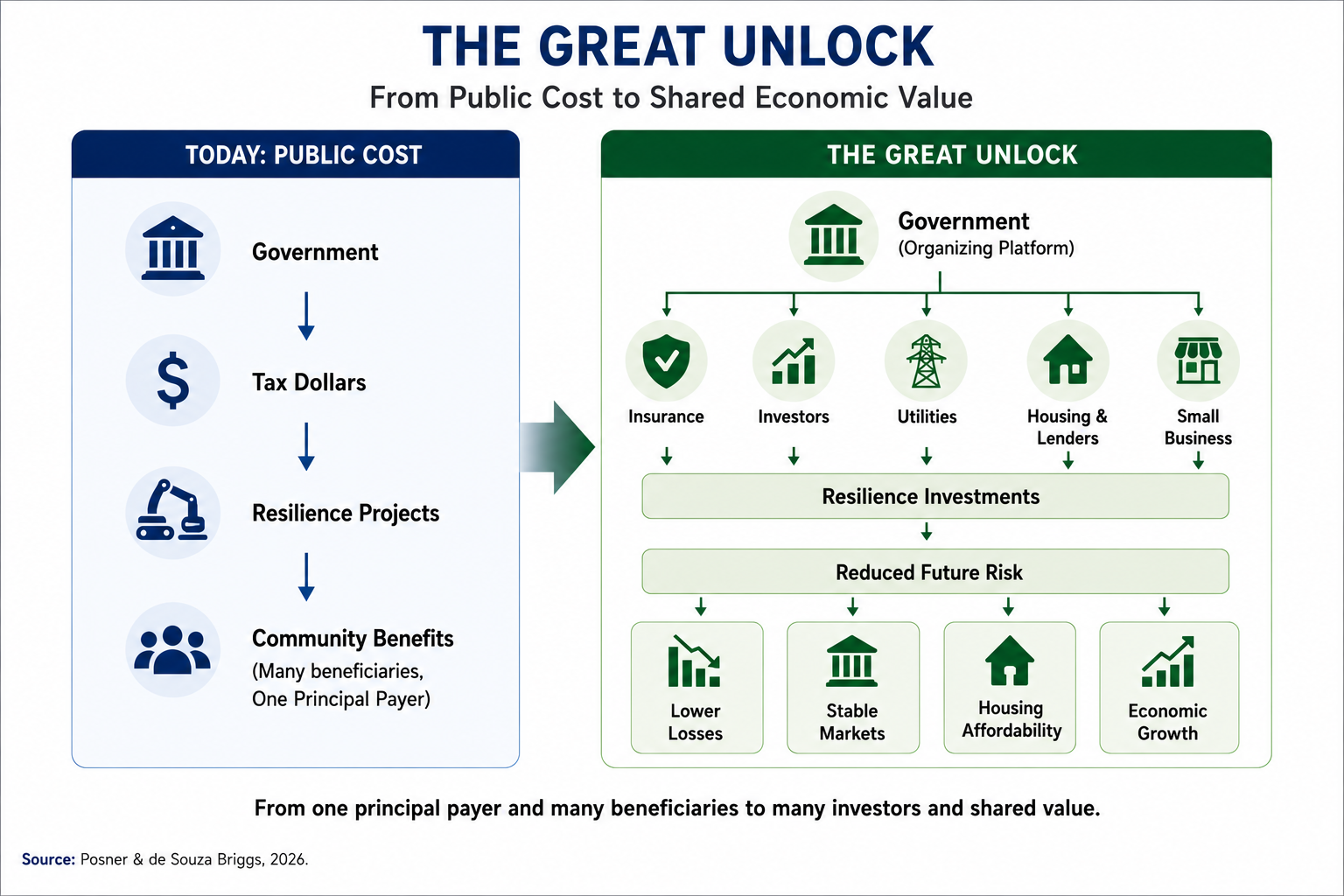
The opportunity lies in the fact that resilience investments create value for many players in the economy, not only for government. This is “the Great Unlock”: When that value can be measured and demonstrated, major new sources of capital—from mortgages and home equity loans to infrastructure bonds and insurance savings—become available to help finance resilience.
The Great Unlock recognizes that resilience creates measurable value for risk reduction across multiple sectors and stakeholders in the economy, from the scale of one household to the scale of an entire community.
For example, stronger homes reduce insurance claims and may make losses more predictable as well—a key to effective modeling and fair pricing. More physically resilient housing also supports mortgage markets and more stable property values. Better infrastructure improves the reliability and affordability of water and power services. Health systems experience fewer operational disruptions during extreme events, not to mention fewer high-cost and stressful emergency room visits in times of crisis. In direct and indirect ways, lower disaster losses also protect state and local balance sheets and the tax base.
Read the full article here.

Read more about resilient public infrastructure on The Epicenter here.
Read more about resilient housing on The Epicenter here.
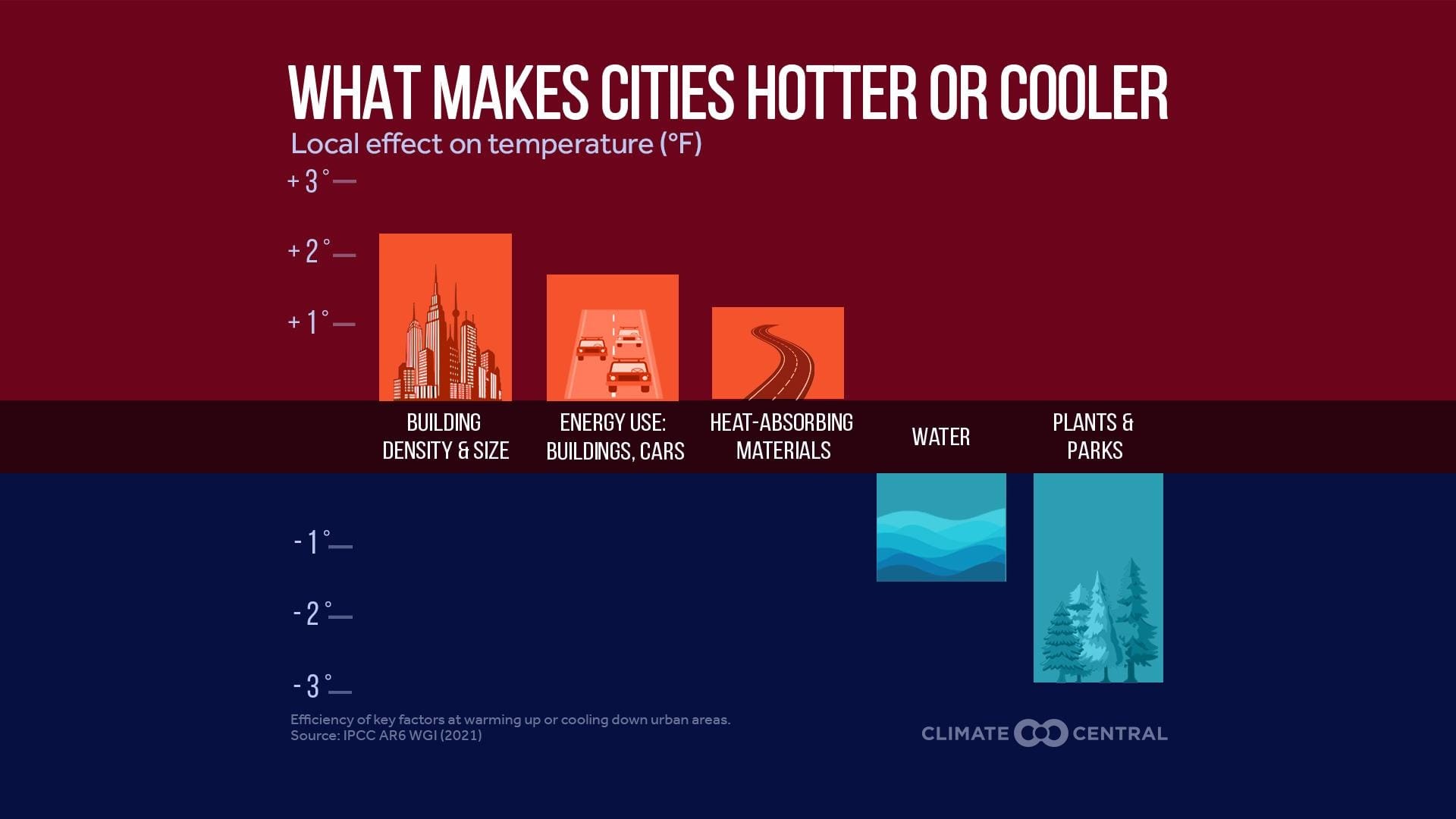
Source: ClimateCentral
Have thoughts to share on this piece, or want to add your voice to the conversation? Reply here.
The Epicenter helps decision makers understand climate risks and discover viable resilience solutions. The Epicenter is an affiliated publication of The Resiliency Company, a 501(c)3 nonprofit dedicated to inspiring and empowering humanity to adapt to the accelerating challenges of the next 100+ years.

Florida and Alabama have spent hundreds of millions fortifying homes. Isaias is the first mainland hurricane to test that resilience since 2024.

Resilience benefits are often spread so widely that no single payer sees the payoff. New models and policies are starting to close that gap.

Two years ago, sessions on resilience were hard to find at Climate Week NYC. This year, they were everywhere.

Municipal markets overlook the cost of aging infrastructure. New tools can help cities size their reserve funds against their actual exposure.