

The Weekly: Disasters Open A Window To Rebuild with Resilience. Policymakers Can Use It To Fix The System.
To address the housing crisis in the U.S., we need a three-part strategy for centering resilience.
To address the housing crisis in the U.S., we need a three-part strategy for centering resilience.

If we don’t build it right and build it to last, new housing supply won’t solve today’s housing crisis.
For most of the country, in most years, the post-disaster window is not the second-best time to invest in resilience. It is the only time anyone does.
Downpours are getting heavier across most of the U.S., and aging drainage systems are struggling to keep up. In response, a fast-growing municipal policy solution is scaling across the country.

Downpours are getting heavier across most of the U.S.—by an average of 30% across the continental U.S., and 60% in the Northeast, since 1958. Today, aging drainage systems are struggling to keep up.
In response, a fast-growing municipal policy solution is scaling across the country to help communities pay for the infrastructure they need: the stormwater utility.
Stormwater utilities charge property owners by how much stormwater they “use”—how much runoff they send into the system—and use that money to fund improvements to stormwater infrastructure. By shifting the financial burden onto the physical footprint of development, the model offers a blueprint for how local governments can price climate risk into the built environment.
Western Kentucky University civil engineering researcher Warren Campbell has spent nearly two decades counting stormwater utilities, and his 2026 survey found 2,202 of them in the U.S., an increase of 22% since 2020.
“The bottom line is that no community is too small nor too large to have a stormwater utility,” he writes.
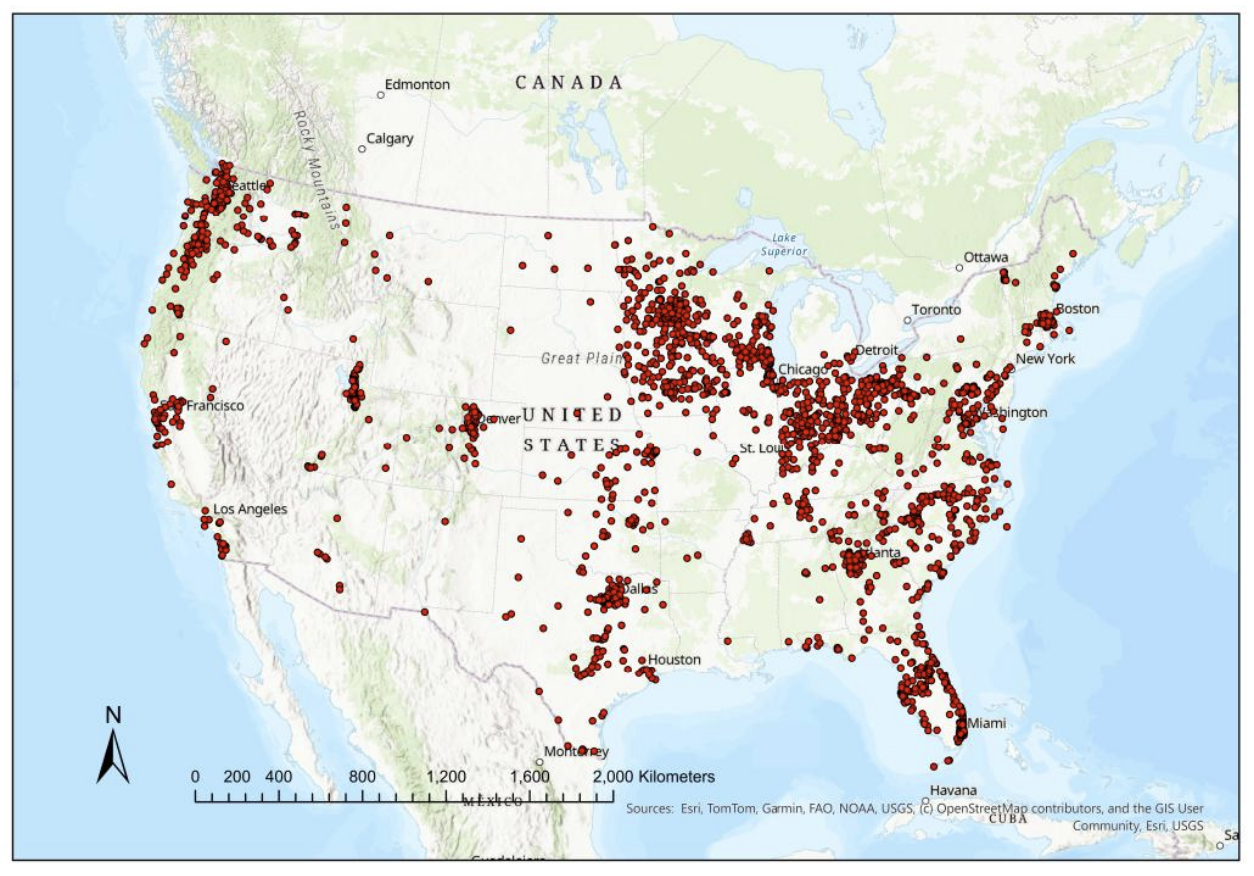
The survey found that stormwater utilities are gaining traction across a wide range of communities and political landscapes. States with the most stormwater utilities include Minnesota, Texas, Ohio, Washington, and Wisconsin.
“In all, I have only found 13 [stormwater utilities] that have been repealed,” writes Campbell. “The officials in more than 99 percent of these communities apparently feel that they are a good idea.”
Some of the newest entries are in New Jersey, whose first utilities formed recently after what Campbell calls years of effort finally bearing fruit.
The Epicenter spoke to the mayor of Maplewood and the Stormwater Utility Supervisor for the Township of Raritan about how they set up their stormwater utilities, how the first year has gone, and their recommendations for municipal leaders who want to raise funds for stormwater management. “Your residents will get it,” says Mayor De Luca, “because they probably are experiencing more flooding in places that have never been affected before.”
Read more about New Jersey’s stormwater utilities in this Epicenter article.

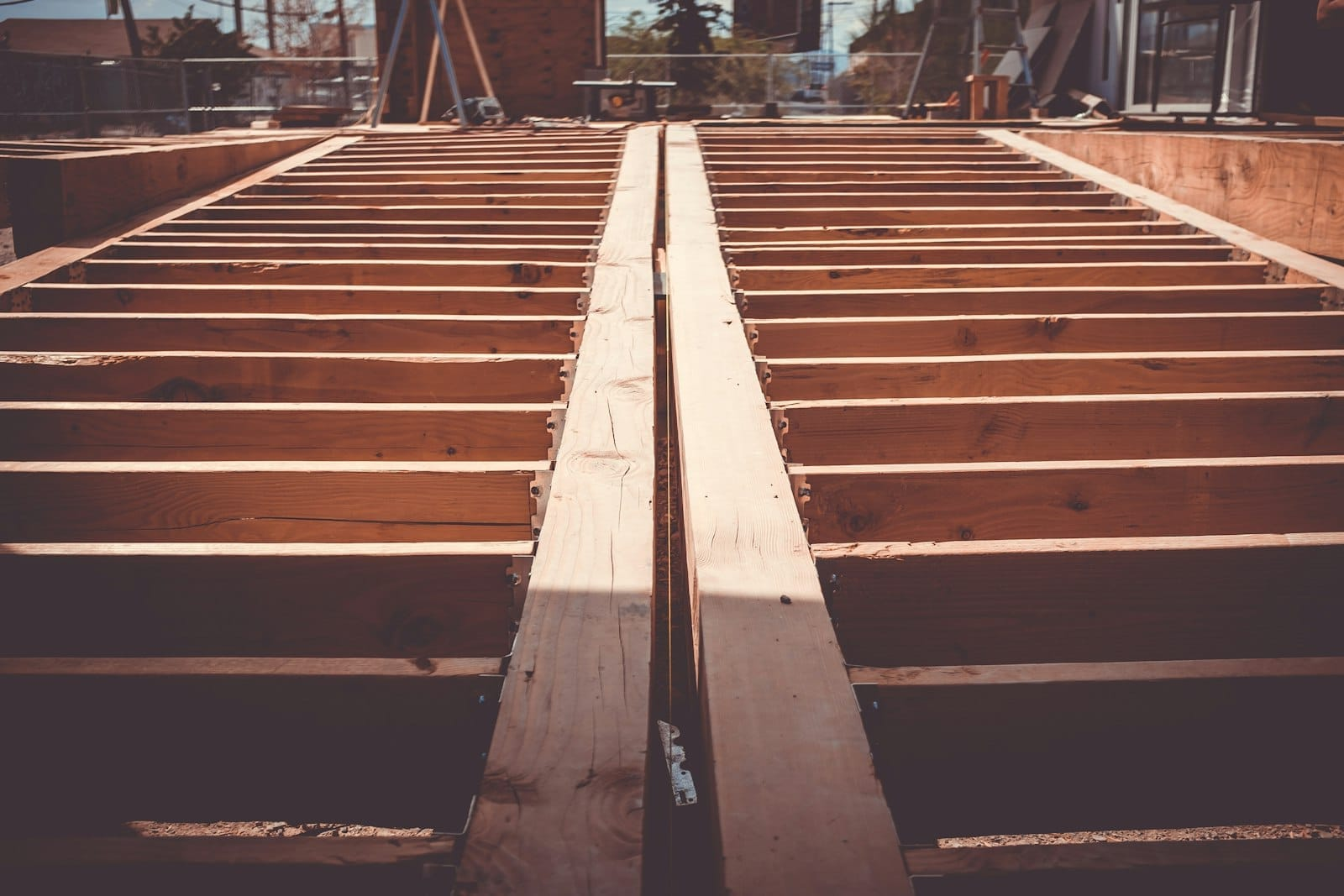
Read more about resilient public infrastructure on The Epicenter here.
Read more about resilient housing on The Epicenter here.
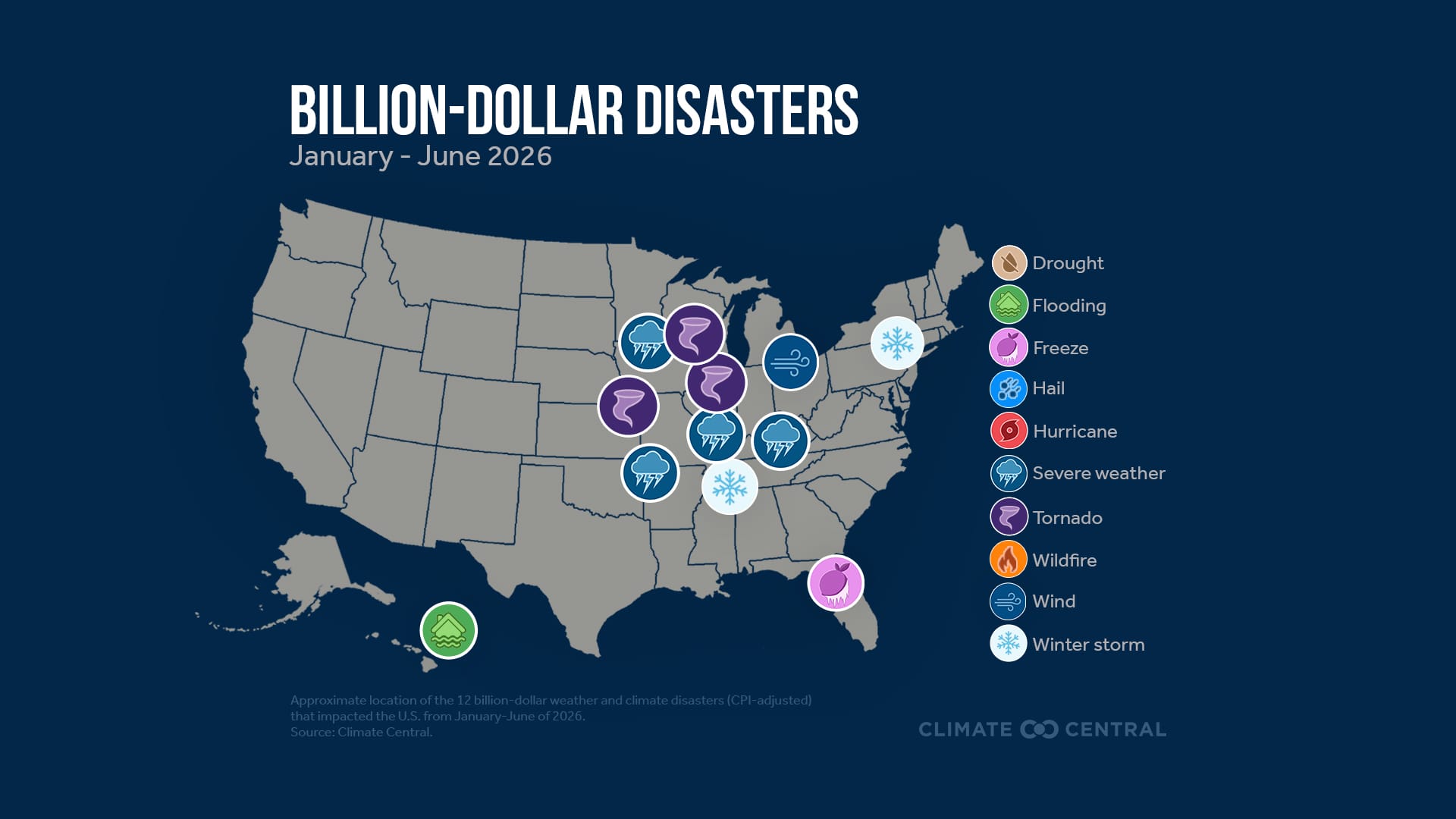
The U.S. has experienced 12 billion-dollar weather and climate disasters during the first half of 2026, causing over $30 billion in damages. Source: Climate Central.
Have thoughts to share on this piece, or want to add your voice to the conversation? Reply here.
The Epicenter helps decision makers understand climate risks and discover viable resilience solutions. The Epicenter is an affiliated publication of The Resiliency Company, a 501(c)3 nonprofit dedicated to inspiring and empowering humanity to adapt to the accelerating challenges of the next 100+ years.

Wildfire season is changing how utilities fortify against wildfires

Corpus Christi's bond downgrades reveal a governance problem, not just a risk problem

S&P 500 companies mentioned "resilience" 600 times on earnings calls last quarter. The word is exploding, and it's losing meaning. New research shows only one kind of resilience moves stock prices.

We need to move beyond asking simply, How do we fund this project? and start asking, What financial risk does this community face, what outcomes could change that trajectory, and how should we invest accordingly?