

The Weekly: El Niño Is a Stress Test for America’s Infrastructure. It Can Show Us Where to Invest Next.
There is a 75% chance that El Niño strength will exceed every event on record since 1950.
There is a 75% chance that El Niño strength will exceed every event on record since 1950.

To address the housing crisis in the U.S., we need a three-part strategy for centering resilience.
If we don’t build it right and build it to last, new housing supply won’t solve today’s housing crisis.
S&P 500 companies mentioned "resilience" 600 times on earnings calls last quarter. The word is exploding, and it's losing meaning. New research shows only one kind of resilience moves stock prices.

The Resiliency Company, in partnership with the Department of Angels, is convening builders, community leaders, advocates, local governments, financing partners, insurers, and resilience practitioners for a day focused on one question: How does rebuilding with resilience become the norm?
Space is limited. Readers of The Epicenter can get 10% off the ticket price with the code EPICENTER. Click here to express your interest in attending on August 18th.
According to Bloomberg’s tracking of earning call transcript data, S&P 500 companies mentioned "resilience" roughly 600 times last quarter, up from under 100 a decade ago. News mentions of the term have followed the same trajectory, climbing steadily since the pandemic.
The term, says University of Zurich researcher Tobias Schimanski, “can cover all sorts of things,” from cyber security to “AI resilience” to cash reserves. As the term explodes, it risks losing its specificity—particularly for decision-makers focused on physical resilience.
Any insurer underwriting a property, investor pricing a bond, or public official evaluating a grant application needs to know whether "resilient" means physically resilient (a wildfire-fortified neighborhood, new resilient public infrastructure, etc.) or resilient in the broader sense.
Schimanski’s new research offers a way to dissect a broad term into more useful sub-categories. Using large language models trained on filings from more than 13,500 firms, the research sorts corporate climate disclosures into five categories, starting with the most concrete and moving to the “most shallow” activity:
Those categories reveal what types of “resilience” actually make a difference to Wall Street. Schimanski found that following hurricane landfalls, firms that had disclosed physical protection measures, like flood walls or hardened facilities, saw their stock prices recover markedly better than exposed peers without those disclosures, offsetting roughly 26% of the average negative reaction over the following month.
“Among the different adaptation categories, physical protection emerges as the only dimension that significantly mitigates these negative effects,” writes Schimanski.
Schimanski’s hypothesis about why this is the case is tied to credibility: “I think physical protection is a credibility signal,” he said in a Climate Proof webinar. “If you think about adaptation, the first thing that comes to your mind is probably: I build a flood wall, or I build fire-secure infrastructure. That is actually what physical protection measures are.”
Among financially constrained firms, even physical protection stopped mitigating losses. Investors appeared to discount resilience claims from companies that looked unable to implement or maintain them.
In 2025, Schimanski says, 90% of firms talked about physical climate risk. “However, only about 20% disclose some kind of adaptation.”
Firms that can point to specific, verifiable, physical protection measures—with evidence of what was built and how it reduces risk—will have an advantage as the resilience rhetoric becomes more commonplace. Private sector operators and investors, as well as municipal leaders, will need to show that evidence.

Read more about resilient public infrastructure on The Epicenter here.
Read more about resilient real estate on The Epicenter here.
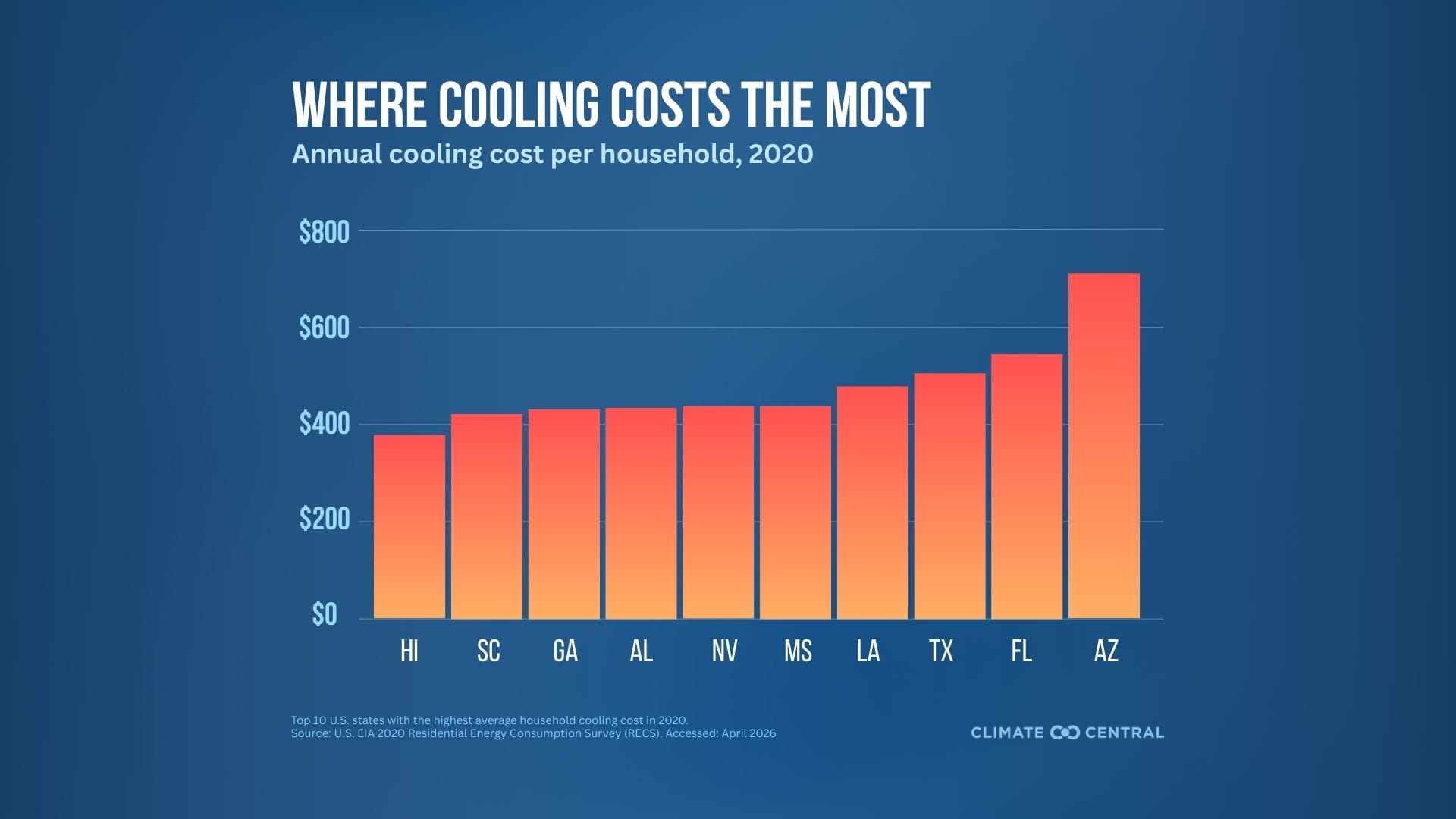
Source: ClimateCentral
Have thoughts to share on this piece, or want to add your voice to the conversation? Reply here.
The Epicenter helps decision makers understand climate risks and discover viable resilience solutions. The Epicenter is an affiliated publication of The Resiliency Company, a 501(c)3 nonprofit dedicated to inspiring and empowering humanity to adapt to the accelerating challenges of the next 100+ years.

There is a 75% chance that El Niño strength will exceed every event on record since 1950.

To address the housing crisis in the U.S., we need a three-part strategy for centering resilience.

If we don’t build it right and build it to last, new housing supply won’t solve today’s housing crisis.

For most of the country, in most years, the post-disaster window is not the second-best time to invest in resilience. It is the only time anyone does.