The Weekly: Extreme Heat Is Straining the Grid. Redesigning How We Build Can Ease the Pressure.
The drivers that make extreme heat so severe were all in play over Independence Day weekend: More people live in areas exposed to extreme heat, existing infrastructure is vulnerable to extreme heat, and cooling is expensive and not universally accessible.
Insights & ideas on resilience straight to your inbox. Were you forwarded this email? → Subscribe here
- Get on the early access list: The Resiliency Company has teamed up with The Nicholas Institute to produce a report on the lessons from six states that have scaled IBHS FORTIFIED roof adoption. Be the first to know. - Feature: Cool roofs, passive-cooling design, and efficient HVAC can shrink the cost of the next heat wave. - From the archive: AI is closing the data gaps that have limited disaster prediction for decades. - In the news: Three ways to de-risk investments in climate-resilient agriculture.
How States are Financing Property-Level Resilience
States across the country are developing innovative approaches to finance property-level resilience investments that reduce future losses from natural hazards.
The Resiliency Company has teamed up with The Nicholas Institute to produce a report on the lessons from six states that have scaled IBHS FORTIFIED roof adoption.
The report, which will be released in the next few weeks, includes lessons for policymakers, philanthropy, insurers, and investors seeking to scale resilient housing.
Extreme Heat is Straining the Grid. Redesigning How We Build Can Ease the Pressure.
Last week, the country’s largest power grid operator, PJM Interconnection, set a new all-time energy demand record. PJM is required to maintain a reserve margin, capacity equal to 20% above expected peak demand, to cover surges and outages. However, for the 2027/2028 delivery year, PJM has already fallen short of that cushion.
The drivers that make extreme heat so severe were all in play over Independence Day weekend: More people live in areas exposed to extreme heat, existing infrastructure is vulnerable to extreme heat, and cooling is expensive and not universally accessible.
Last week, power prices hit $2,000 per megawatt-hour as air-conditioning use spiked (compared to a typical $40 per megawatt-hour). And a Washington Post analysis found that three million households in the recent heat wave’s footprint don’t have air conditioning.
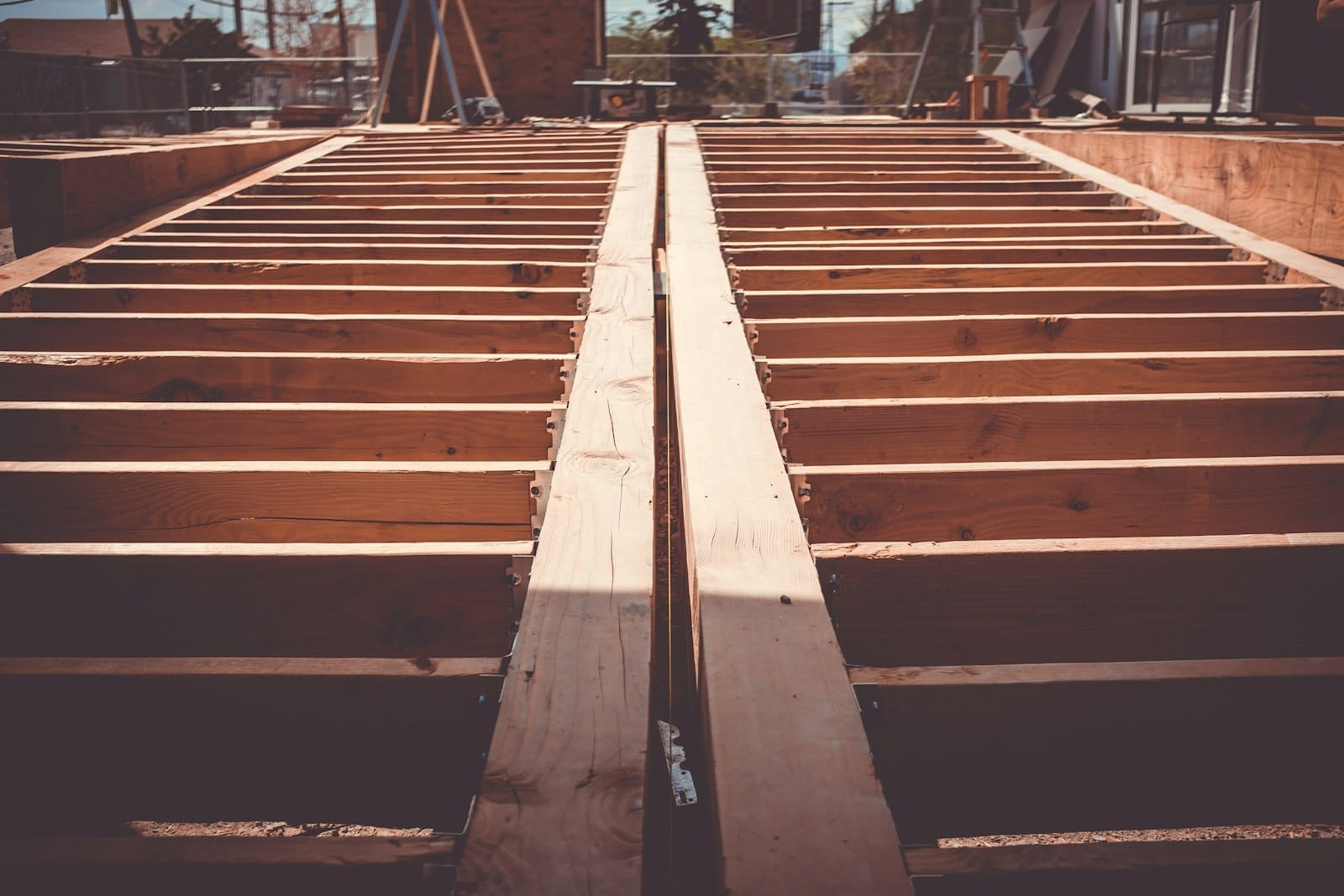
In the second part of our extreme heat briefing, we discuss the levers that can reduce the costs of extreme heat. Let’s zoom in on one: changing how we build to better withstand hotter temperatures. The built environment can amplify extreme heat, absorbing up to 95% of incoming solar energy and radiating it back into the surrounding air.
According to a recent Reuters article, asphalt and concrete surfaces can reach temperatures of 149°F or higher under full sun, more than 25 degrees above the air temperature registered a few feet up. Grass, by contrast, stays close to the ambient temperature.
If cities are acting like giant heat batteries, one solution is to redesign them so they stop trapping so much heat in the first place. Here are some promising interventions:
Use materials that reflect heat: Cool roofs are designed to reflect more sunlight than conventional roofs and can stay more than 50°F cooler. Companies like Enviroshake and Landmark have developed roofing products with cooling technology. Likewise, Nanotech’s Cool Roof Coat has the potential to deliver, according to the company, an 88% reduction in heat transfer through the roof, lowering indoor temperatures by 25-45°F and resulting in a 49% reduction in HVAC costs. In Los Angeles, the “Cool°Streets” initiative has covered 60 miles of pavement with reflective paint, lowering road temperatures by up to 15°F.
Design buildings to keep spaces cooler: Much of Western architecture has forgotten the architecture, building materials, and cooling techniques still common in the Middle East, which aim to reduce indoor and outdoor temperatures. For example, many structures throughout the Middle East use passive cooling techniques that harness the wind, like barajeel wind towers, which funnel breeze down to cool interiors without electricity. John Onyango, a professor at the University of Notre Dame School of Architecture, said that barajeel wind towers can lower temperatures by up to 50°F, depending on their design and wind conditions. Around the world, passive-cooling architecture is catching on, alongside “passive house” design, which minimizes heating costs. According to passive house experts in New York, taller buildings are easier to insulate, so city high-rises are actually perfect candidates. In 2023, the Winthrop Center in Boston became the world’s largest “passive” structure, using a “heat-exchange wheel” to keep the building cool in the summer and warm in the winter.
Install new cooling systems: There are opportunities to expand the installation of cooling products across the market, from single-family homes to schools to warehouses. The Compound Annual Growth Rate (CAGR) for the HVAC market in the U.S. is projected to grow at a rate of 7.4% between 2024 and 2030. Meanwhile, as cooling systems are installed more widely, there is also an imperative to implement cooling systems that use less energy.
Other tactics include fortifying the grid, advancing alternative cooling innovations like heat pumps, and financing cooling infrastructure with blended public and private capital.
Read more about the drivers of extreme heat here, and the levers to reduce its costs here.
Active Construction Sites Are Climate Risk Blind Spots: Lessons from Hurricane Ian | The Epicenter | In an interview with The Epicenter, Joe Rozza of Ryan Companies explains what happens when a major storm hits mid-construction and why CRE leaders should give as much weight to their works in process as they do to projects on either end of the building spectrum.
Climate Due Diligence Is Opening a New Front for Insurance Brokers in M&A | Insurance Business | Climate risk is becoming a core part of mergers and acquisitions, with buyers increasingly scrutinizing whether target companies face growing insurance costs, inadequate resilience measures, or future insurability challenges. As a result, insurance expertise is becoming a competitive advantage in dealmaking.
The Unusual Alliances Tackling Weather Risk To The Insurance Industry | Forbes | As extreme weather makes insurance more expensive and harder to obtain, universities, insurers, and NASA are combining their expertise to improve how weather risk is measured and managed. The new Center for Innovation in Risk, Catastrophes, and Decisions (CIRCAD) will develop forecasting tools and risk models designed to help insurers, governments, and communities better prepare for extreme weather.
More Locally Led Climate Change Adaptation Is Needed, Study Finds | Forbes | A new report from the Zurich Climate Resilience Alliance argues that climate adaptation efforts are most effective when local communities help shape priorities, funding, and implementation. The analysis calls for shifting adaptation finance and decision-making away from top-down models toward locally led approaches, with greater investment in community organizations and local governments.
More Living Shorelines Could Come to States Bordering Chesapeake Bay if the Region’s Senators Get Their Way | Inside Climate News | Lawmakers from Virginia, Maryland, and Delaware are seeking federal funding to expand living shorelines: nature-based coastal infrastructure that reduces erosion, absorbs floodwaters, and can adapt over time. As sea levels rise and nuisance flooding increases, communities across the Chesapeake Bay are seeing living shorelines as a long-term resilience strategy.
Read more about resilient public infrastructure and government solutions on The Epicenter here.
Real Estate & Construction
Inside Homes That Last: Rethinking Residential Design for Climate Resilience | ArchDaily | As climate hazards reshape residential design, resilience is becoming a core architectural principle. This overview examines how architects are incorporating wildfire-resistant materials, flood-conscious site planning, backup power, high-performance building envelopes, and durable window systems to help homes withstand and recover from disasters.
As California Wildfire Risk Disrupts Insurance Markets, Bay Area Real Estate Faces a Reckoning | Urban Land Institute | California's insurance crisis is reshaping real estate economics, and climate risk modeling increasingly influences property values, lending, and development decisions. This article argues that properties that invest in risk mitigation—and clearly document their resilience measures—are better positioned.
Read more about resilient real estate on The Epicenter here.
Private Investment
The Lull Before the Storms: Businesses Should Test Hurricane Plans, Panel Says | Insurance Journal | A quieter hurricane forecast should be viewed as an opportunity to strengthen preparedness, not lower defenses, according to emergency leaders from Florida utilities and healthcare organizations. The panel emphasizes that regular drills, communication planning, supply chain coordination, and leadership engagement are essential to ensuring continuity when disasters strike.
Physical Climate Risk Is Rising. A New Report Maps the Fastest Path from Awareness to Action | C2ES | Most companies already have access to climate risk frameworks and tools, but they aren't connected to each other in ways that support decision-making. A report from C2ES and Systemiq identifies the biggest barriers and provides two open-access resources to help: a browsable catalog of resilience tools and guidance, and a climate resilience “maturity” self-assessment.
Read more about private investment on The Epicenter here.
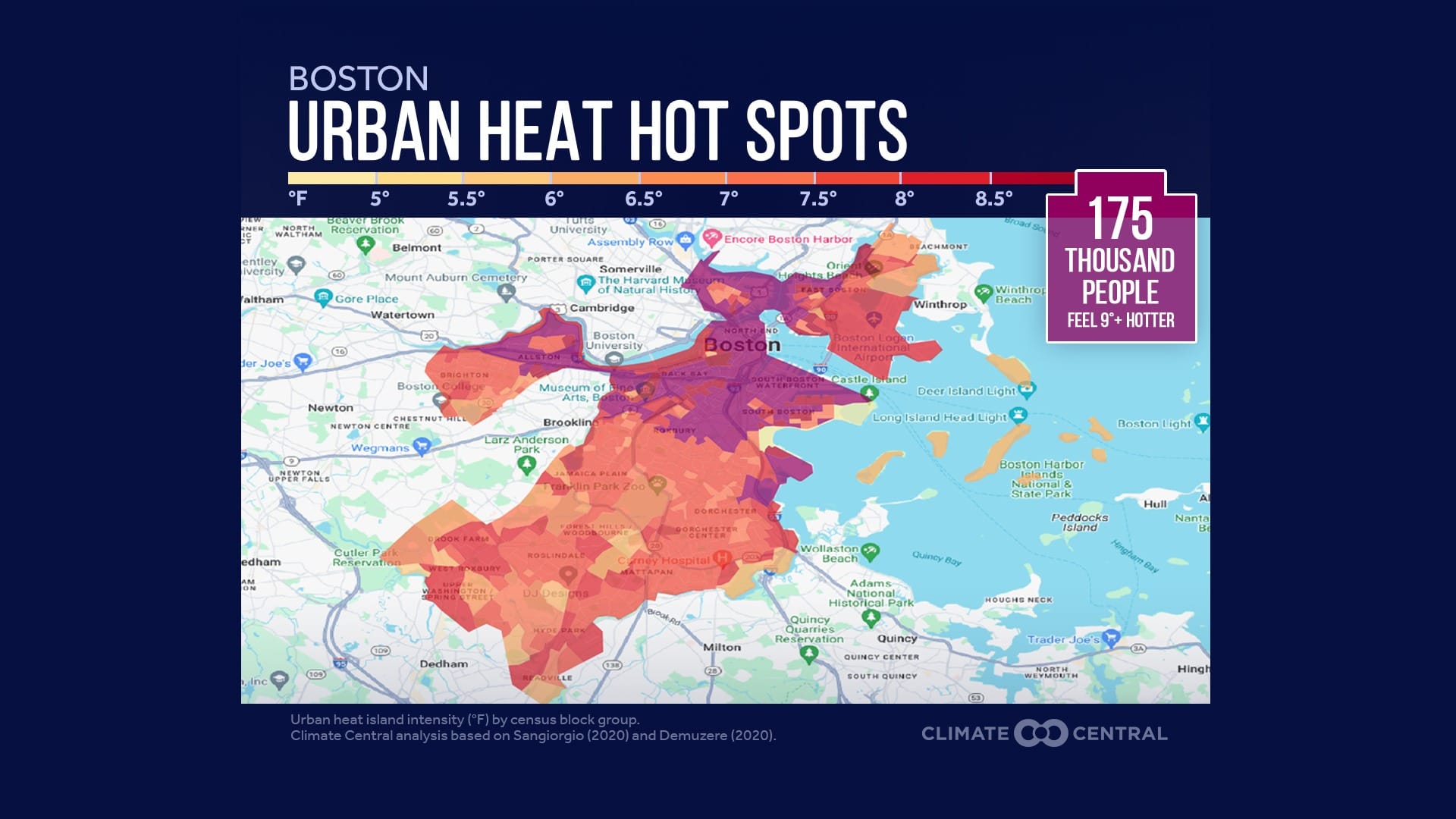
The Map of the Week
The residents of the 65 largest U.S. cities experience an average of 8°F of extra heat due to the built environment.
Have thoughts to share or want to add your voice to the conversation? Reach out!
The Epicenter helps decision makers understand climate risks and discover viable resilience solutions. The Epicenter is an affiliated publication of The Resiliency Company, a 501(c)3 nonprofit dedicated to inspiring and empowering humanity to adapt to the accelerating challenges of the next 100+ years.